
Myth busted: AI cannot be your doctor or lawyer
AI is great for plain-English explanations and preparing questions, but not for high-stakes decisions about health, money or the law. Here is how to use it wisely.
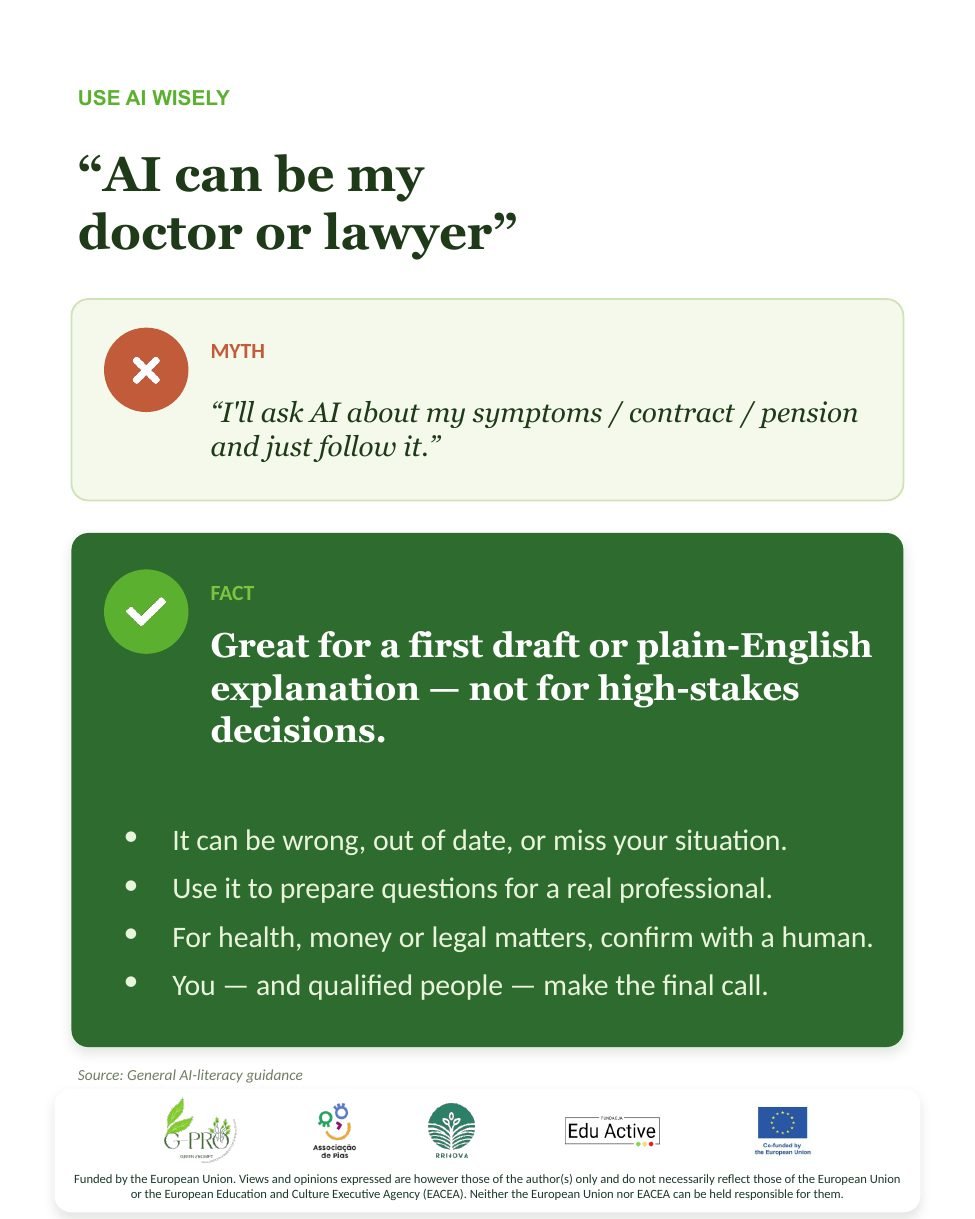
It is tempting. You have a worrying symptom, a confusing contract or a question about your pension, and an AI assistant is right there, ready to answer at any hour. Some people think: "I'll ask AI about my symptoms, contract or pension and just follow it."
That is a myth worth clearing up.
What AI is good for
AI can be genuinely helpful with serious topics, as long as you use it in the right way. It is great for a first draft or a plain-English explanation. It can explain medical words in a letter from your hospital, describe in simple terms what a section of a contract usually means, or help you understand the vocabulary used about pensions.
That kind of help can make you feel more confident and better prepared.
Why it is not enough for big decisions
AI is not suitable for high-stakes decisions. It can be wrong, out of date, or miss your situation. It does not know your full medical history, the exact terms of your agreement or the rules that apply to you personally. It may also give an answer that sounds completely sure, even when it is not.
When the consequences matter for your health, your money or your legal rights, a mistake can be costly.
Use it to prepare, not to decide
One of the best uses of AI here is to prepare questions for a real professional. Before an appointment with your doctor, pharmacist, lawyer or financial adviser, you can ask AI to help you list what to ask, so you make the most of your time.
For health, money or legal matters, always confirm with a human. You, together with qualified people, make the final call.
Learn more
The G-PRO Handbook chapter on thinking critically about AI answers explains the EVALUATE and DECIDE steps, and how to stay in charge of important decisions. The G-PRO board game includes myth-and-fact questions like this one to talk through together.
Source: General AI-literacy guidance
More from G-PRO

What AI actually is (and what it isn't)
AI can feel mysterious, but the basic idea is simple. Here is a plain-language look at how today's AI works, what it cannot do, and why you stay in charge.
Read more →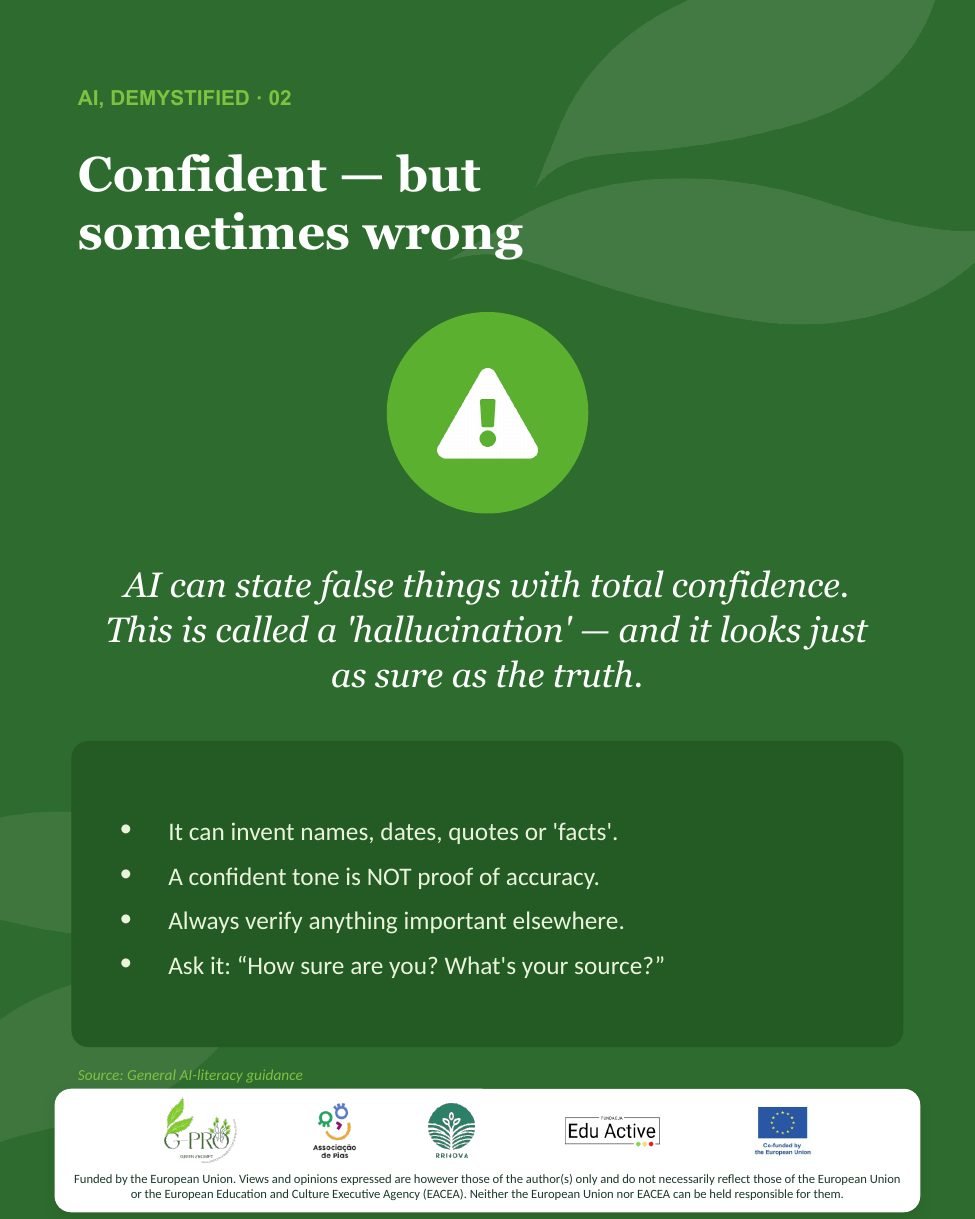
Confident, but sometimes wrong: understanding AI "hallucinations"
AI can state false things with total confidence. Learn what a hallucination is, why a sure tone is not proof, and simple ways to check what AI tells you.
Read more →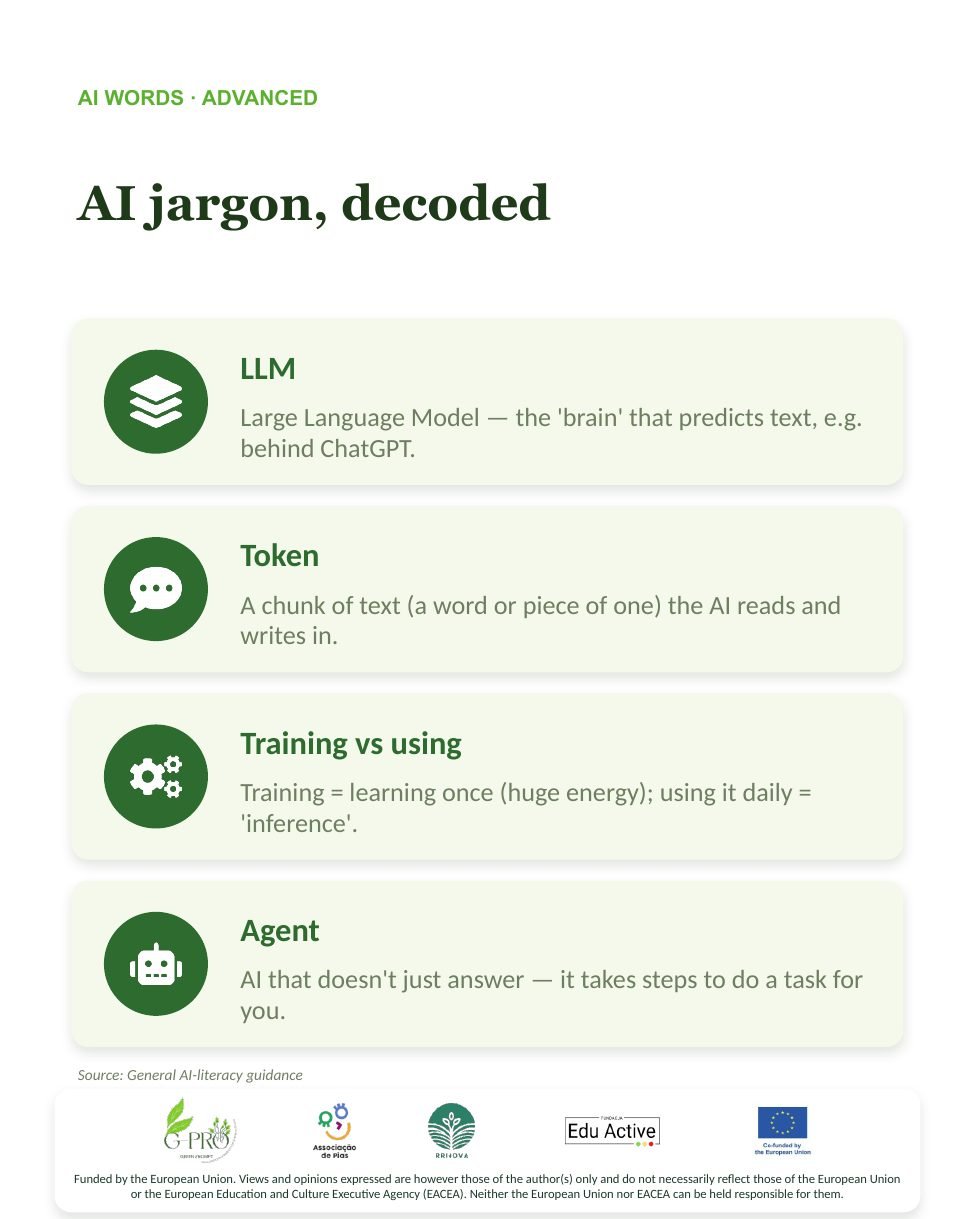
AI jargon, decoded: four words worth knowing
LLM, token, inference, agent: AI comes with a lot of new vocabulary. Here are four common terms explained in plain language.
Read more →