Newsletter
No. 1
No. 1

Project news, articles on AI and green living for older adults, newsletters and G-PRO events.
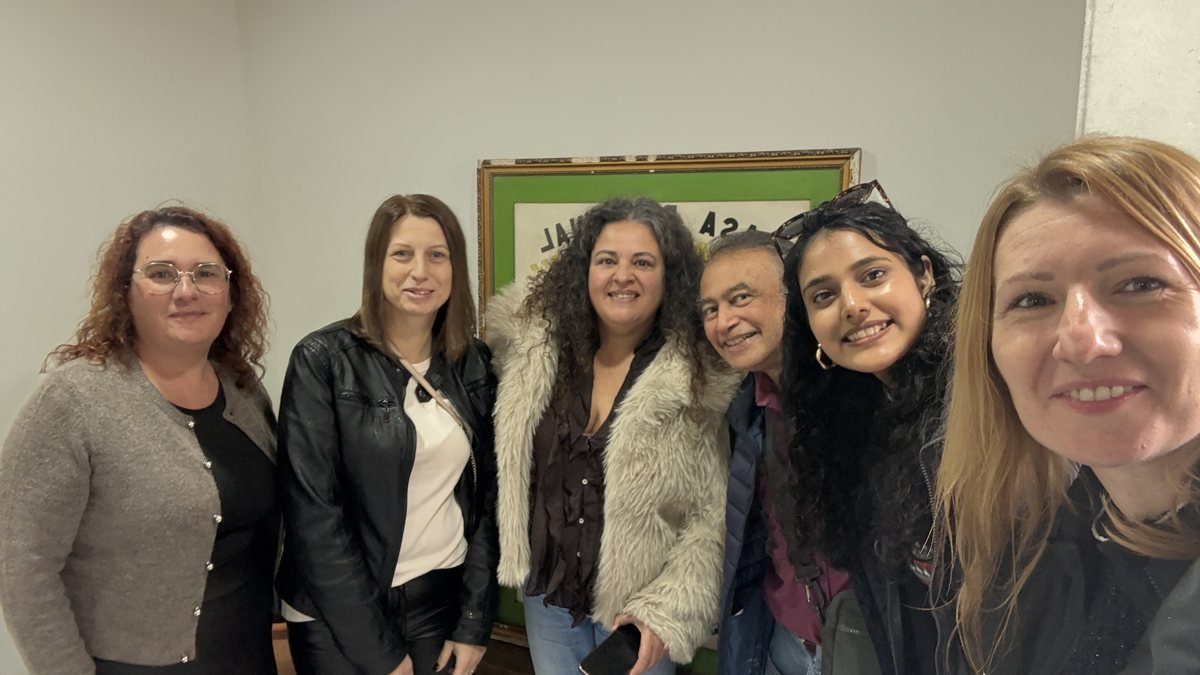
On 5 December 2025 the three G-PRO partners met in Lisbon, Portugal, for the project's kick-off meeting, hosted by the coordinator, Associação de Melhoramentos e Bem Estar Social de Pias (AMBESP).
· Read more →
The first G-PRO press release announces the start of the project and its kick-off meeting in Lisbon on 5 December 2025.
· Read more →
The G-PRO partners have held focus groups with senior learners and adult educators in all three partner countries. What participants said is shaping the game, the handbook and the training.
Read more →
Artificial intelligence is already part of everyday life. Understanding it helps older adults stay confident, safe and in charge of their own decisions.
Read more →
Three steps that keep you in charge whenever you use an AI chatbot, with a worked example about keeping cool in a heatwave.
Read more →
A free series of 26 illustrated posters on food and textile waste, hidden water, labels and myths, energy at home, what AI is, better prompts, and staying safe from AI scams.
Read more →
A flower-shaped board, 150 cards and four letters to collect: the G-PRO board game turns green habits and AI skills into conversation around the table.
Read more →
The digital version of the G-PRO board game helps educators run sessions on a laptop, tablet or projector, while the group still talks, votes and decides.
Read more →
Long before anyone spoke of sustainability, our parents and grandparents mended, preserved and saved. Their habits fit modern life better than we might think.
Read more →
Not every green claim on a label means what it says. A few simple questions help you see through vague promises and shop with confidence.
Read more →
Games are not just for children. Playing together helps adults learn from each other, remember what matters and stay motivated, which is why G-PRO is built around a board game.
Read more →
A plain-language handbook, a complete training and facilitator pack, and a research and evaluation toolkit: everything you need to run G-PRO is free to use.
Read more →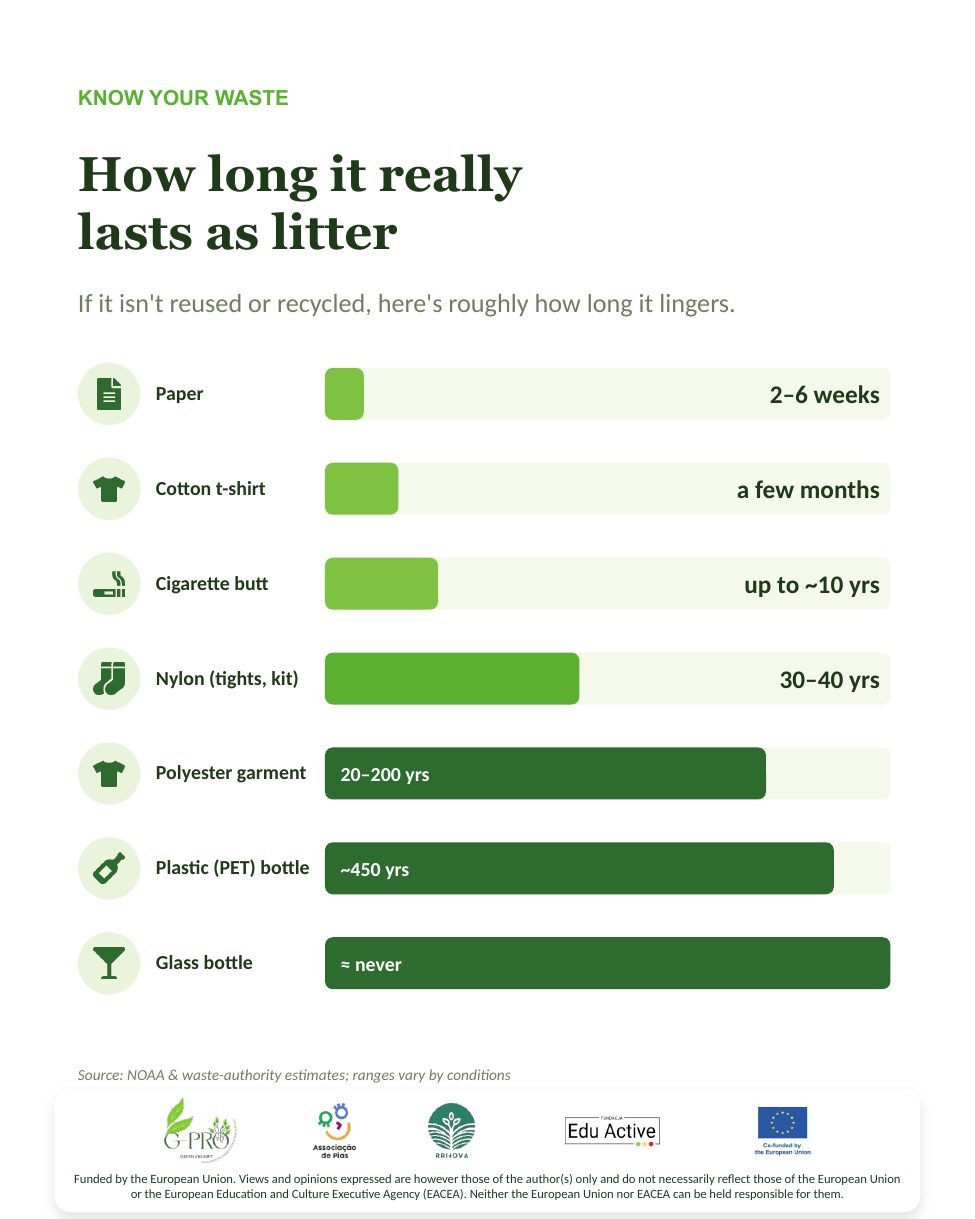
A paper bag disappears in weeks, but a plastic bottle can linger for around 450 years. Knowing how long things last helps us choose what to reuse, recycle and avoid.
Read more →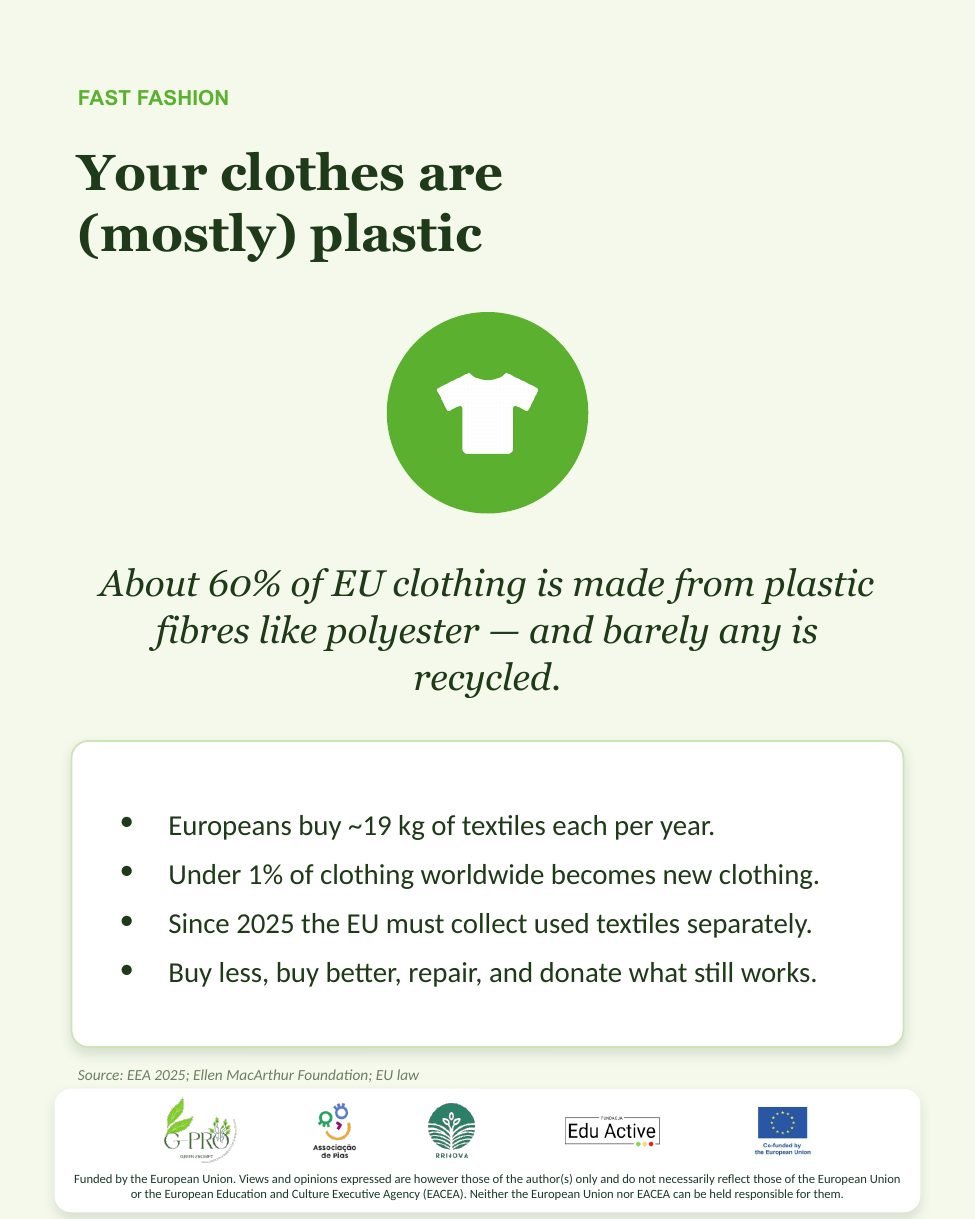
Most clothing sold in the EU is made from plastic fibres, and very little is ever recycled. Here is what that means, and how to buy less, buy better and make clothes last.
Read more →
Washing synthetic clothes releases tiny plastic fibres into our water. A few simple changes to how you wash and dry can cut this down.
Read more →
Most of the water we use is hidden in the things we buy, from a cup of coffee to a pair of jeans. Discover your hidden water footprint and simple ways to reduce it.
Read more →
What we eat often matters more for the climate than how far it has travelled. Here are five simple ideas for climate-smart eating, with balance rather than perfection.
Read more →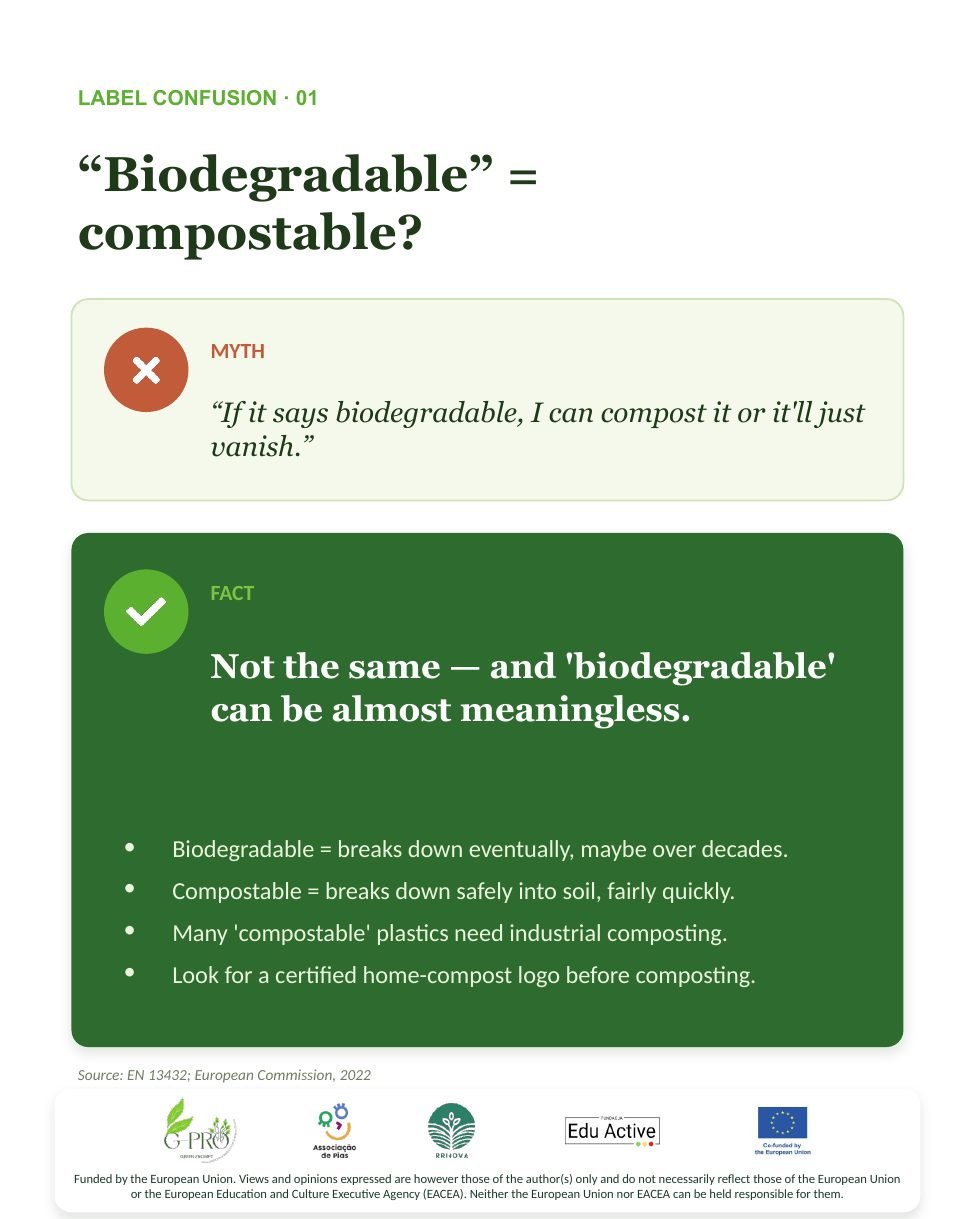
It is easy to think a biodegradable label means something will vanish or can go on the compost heap. Here is the real difference, and what to look for before composting.
Read more →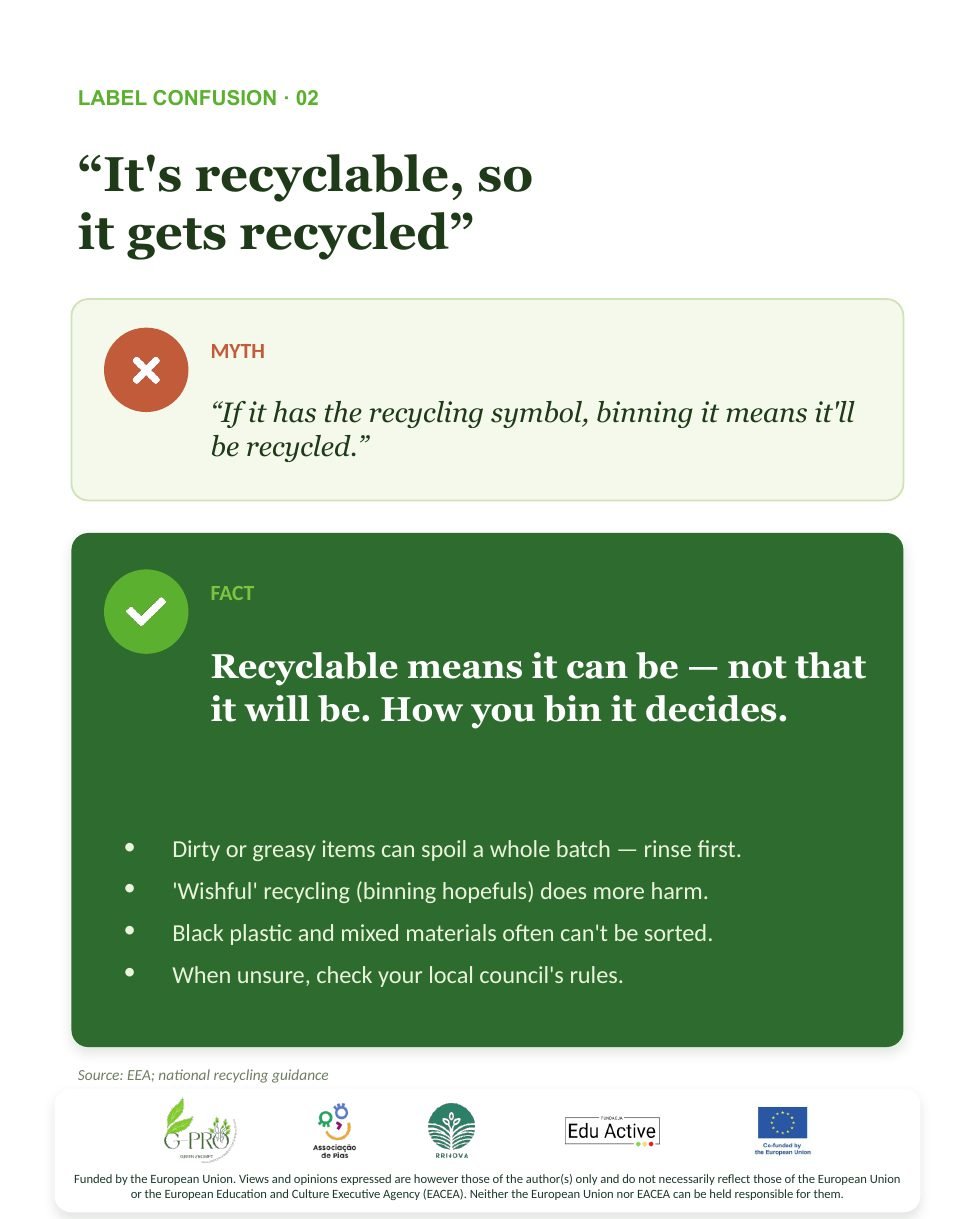
The recycling symbol tells you an item can be recycled, not that it will be. How you sort and clean it decides what happens next.
Read more →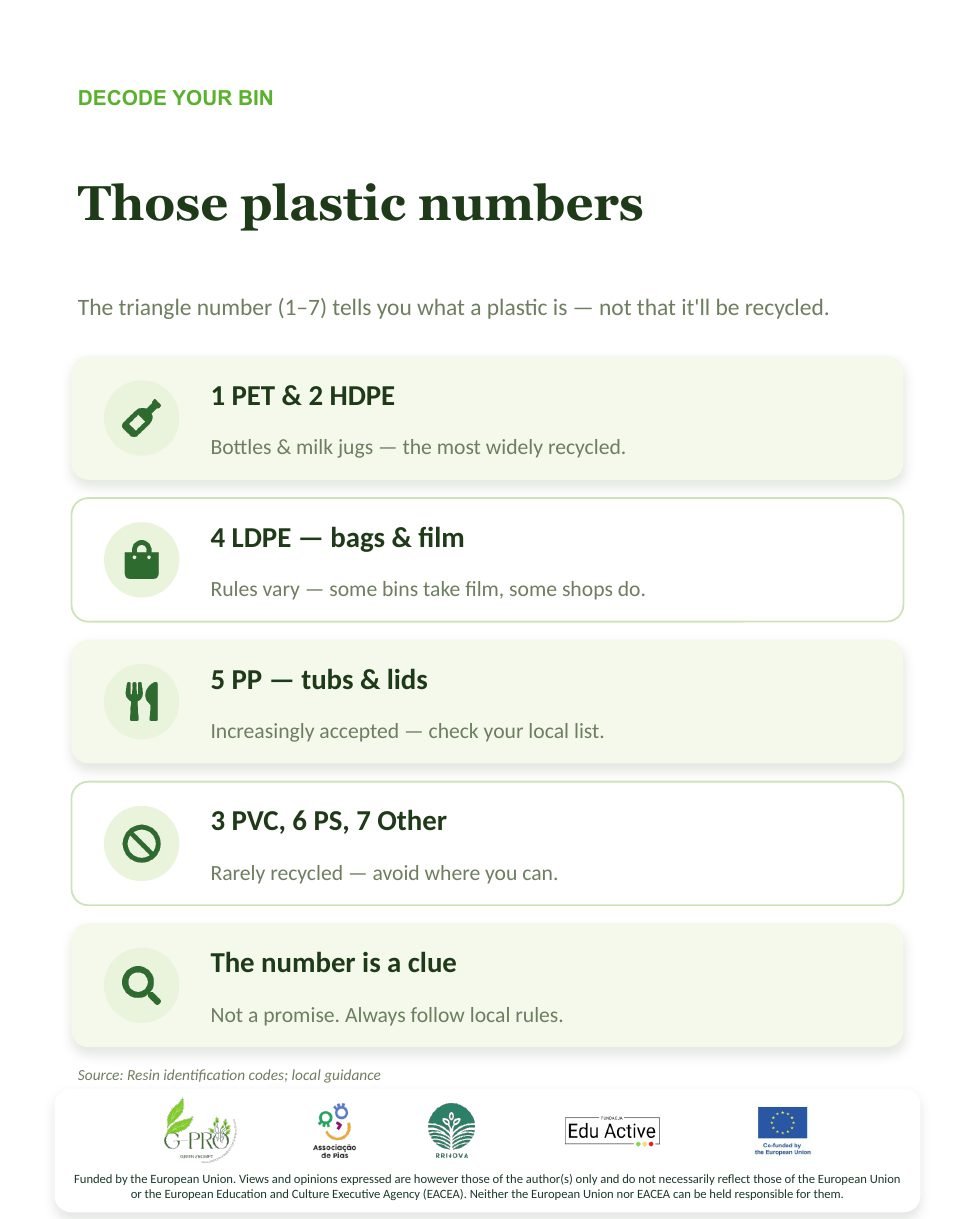
The little number inside the recycling triangle tells you what kind of plastic something is, not that it will be recycled. Here is a simple guide to what the numbers mean.
Read more →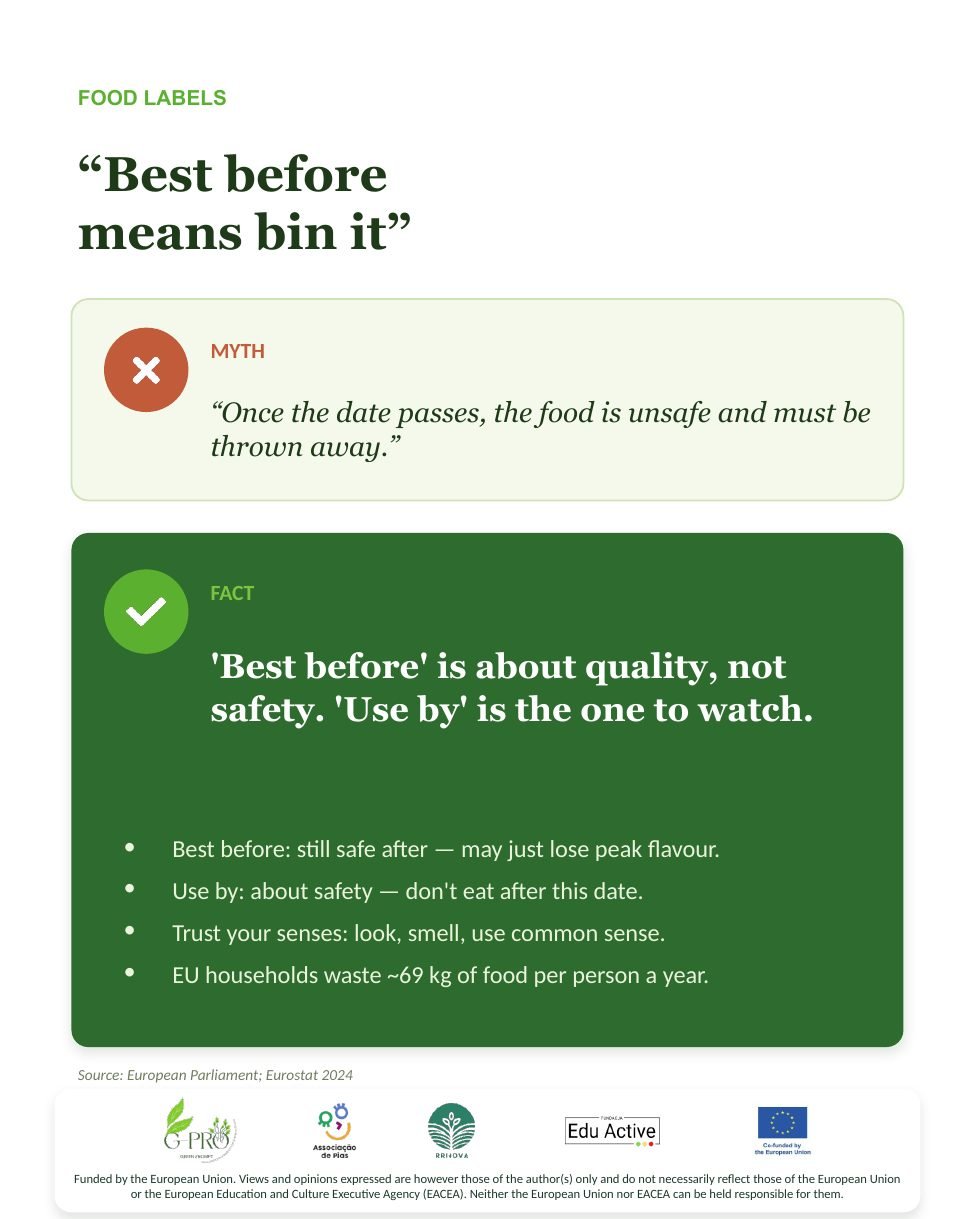
A "best before" date is about quality, while "use by" is about safety. Knowing the difference helps you save money and waste less food.
Read more →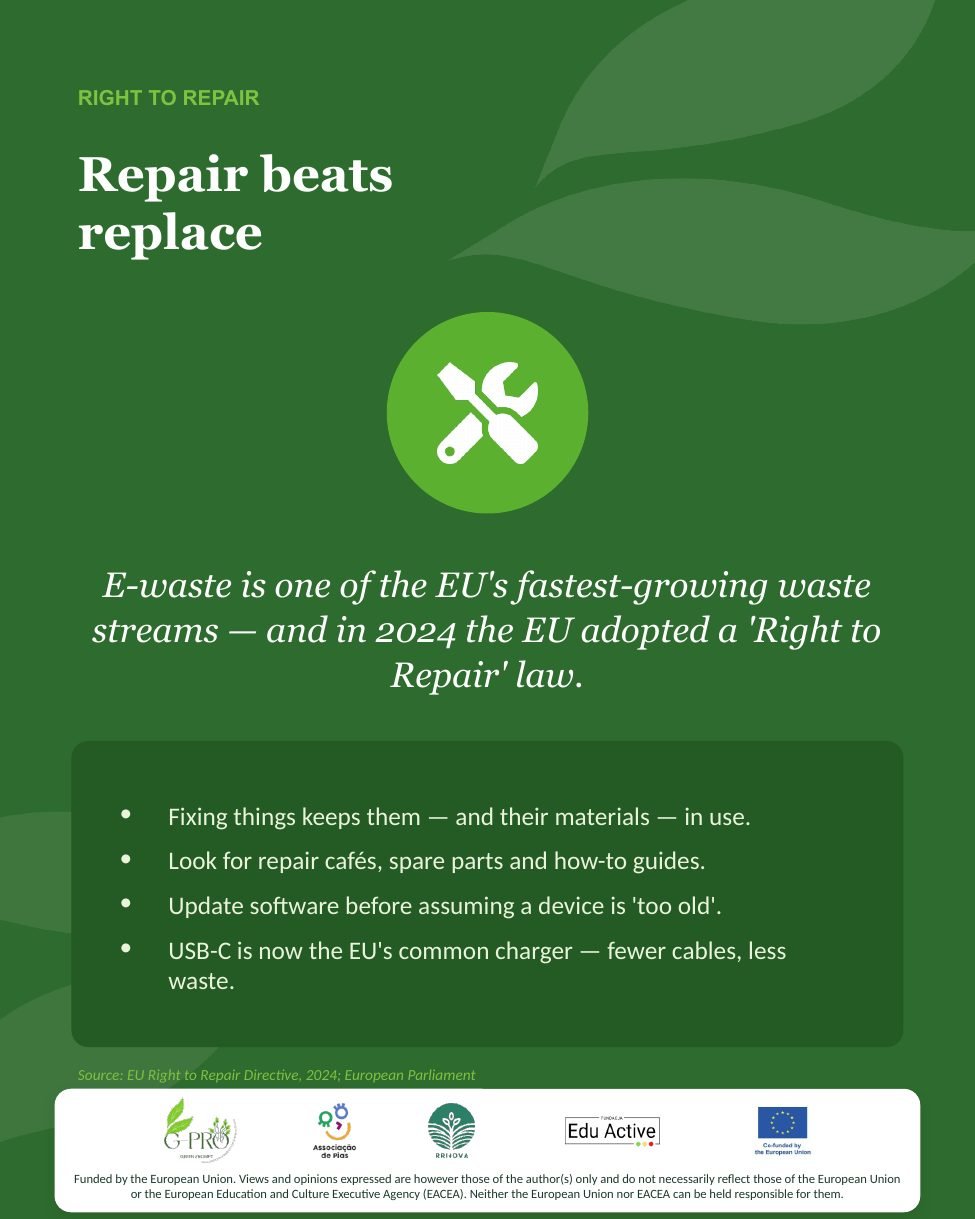
E-waste is one of the EU's fastest-growing waste streams, but the EU has adopted a Right to Repair law, which applies since July 2026. Here is how fixing things keeps them, and their materials, in use.
Read more →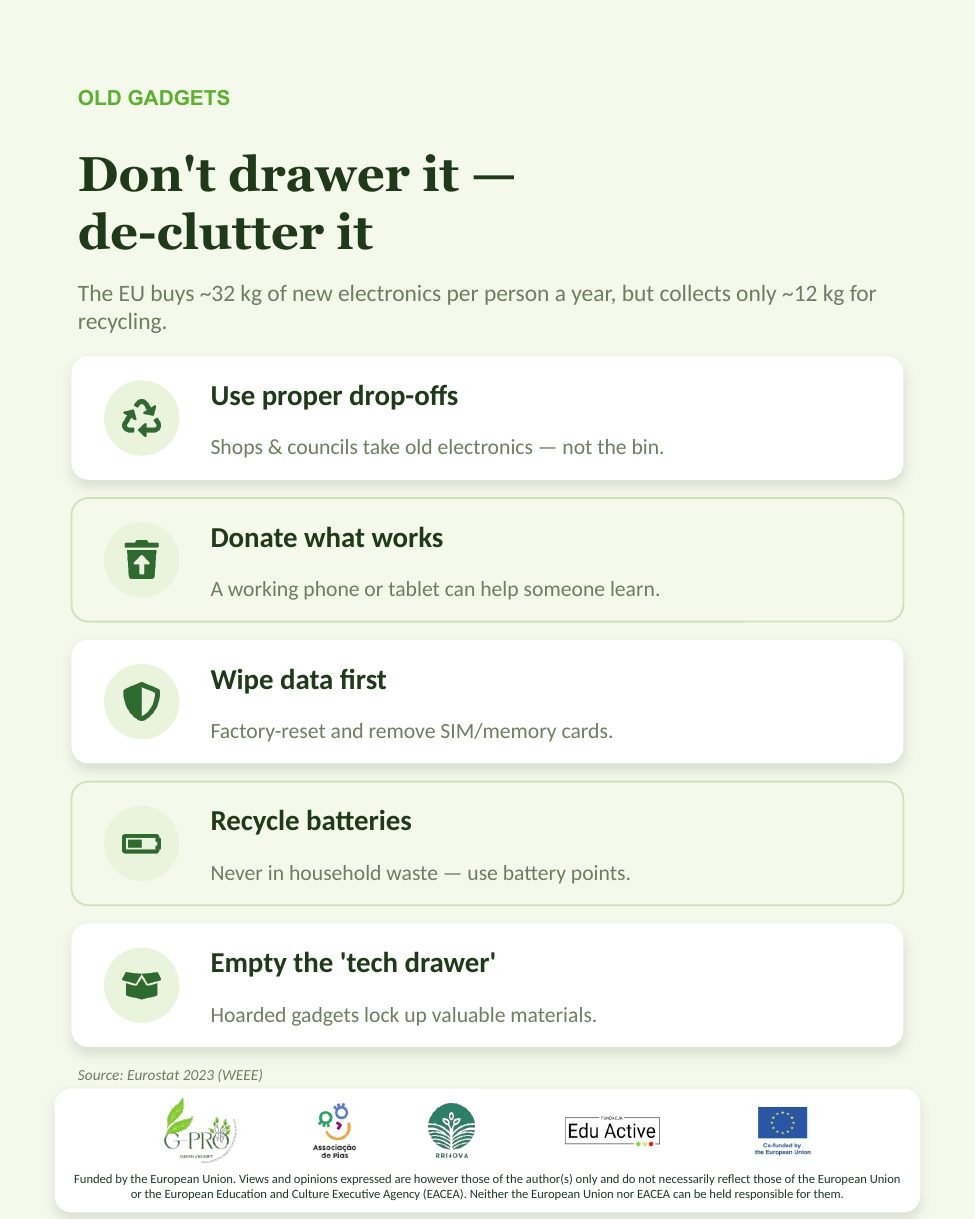
Many of us have a drawer full of old phones, chargers and cables. Here is how to clear it safely, by donating, recycling and wiping your data first.
Read more →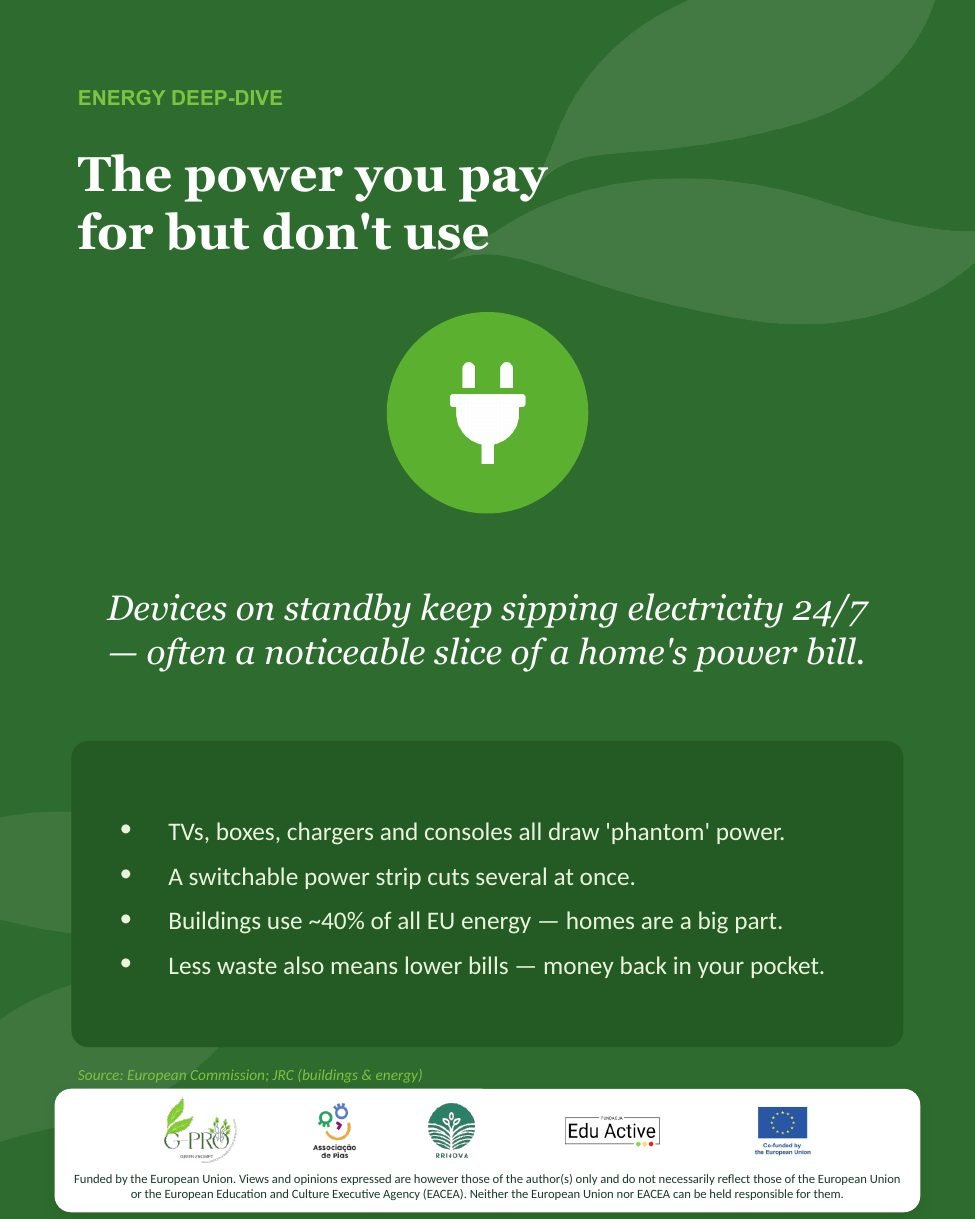
Devices on standby keep using electricity day and night. A few simple habits cut this hidden "phantom" power and lower your bills.
Read more →
Many people in the EU struggle to keep their home warm. Here are five practical habits that help you stay comfortable and healthy while keeping heating costs in check.
Read more →
AI can feel mysterious, but the basic idea is simple. Here is a plain-language look at how today's AI works, what it cannot do, and why you stay in charge.
Read more →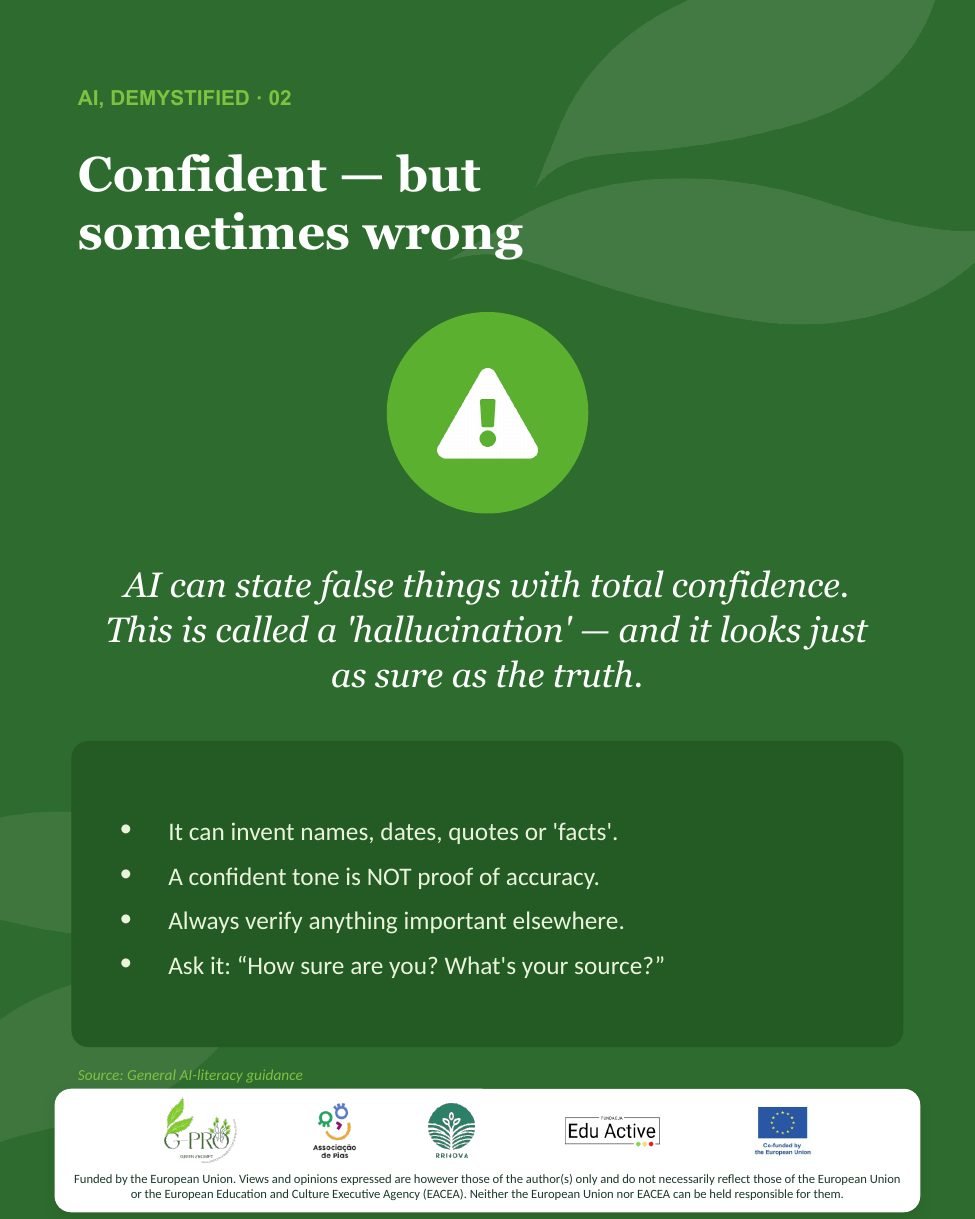
AI can state false things with total confidence. Learn what a hallucination is, why a sure tone is not proof, and simple ways to check what AI tells you.
Read more →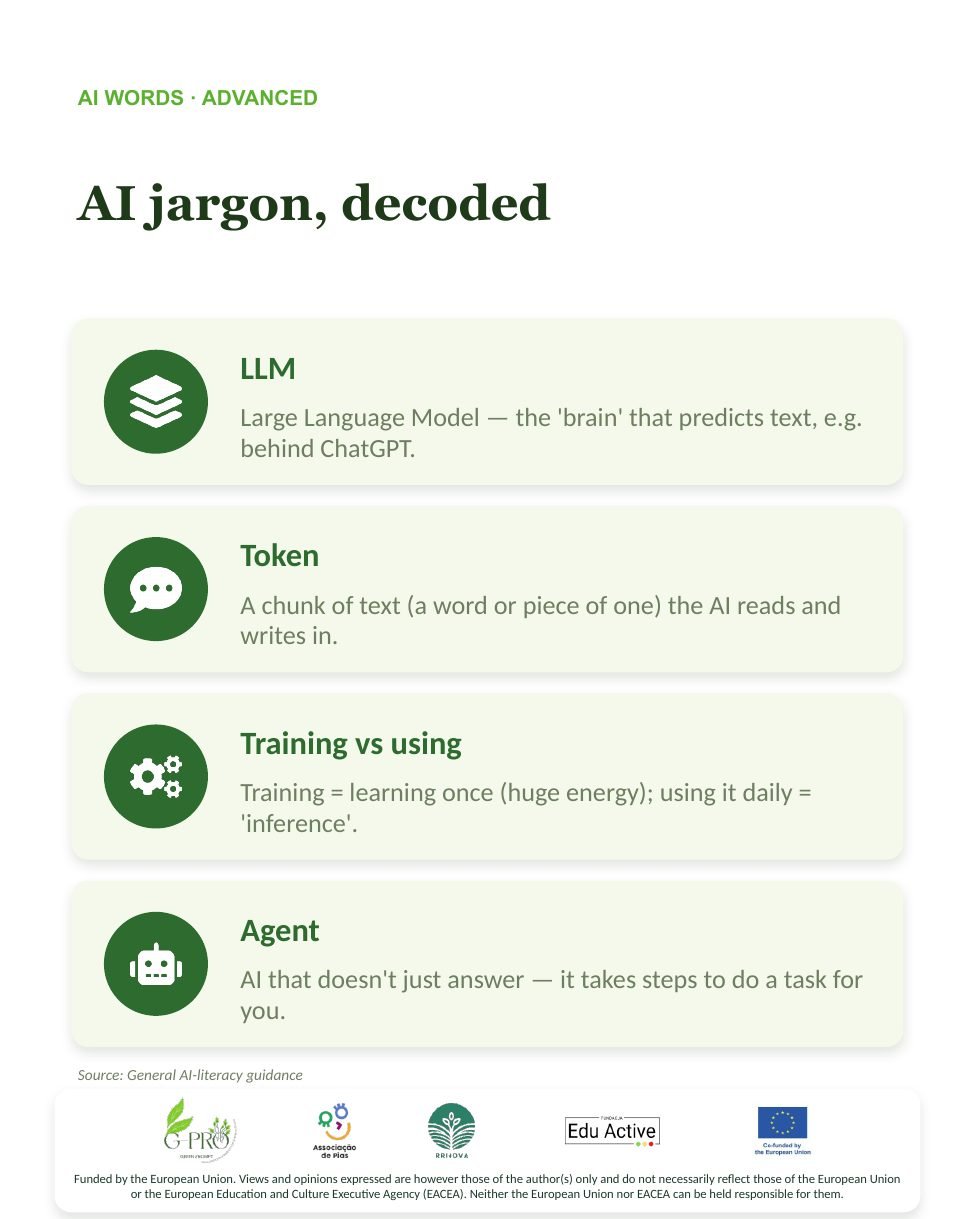
LLM, token, inference, agent: AI comes with a lot of new vocabulary. Here are four common terms explained in plain language.
Read more →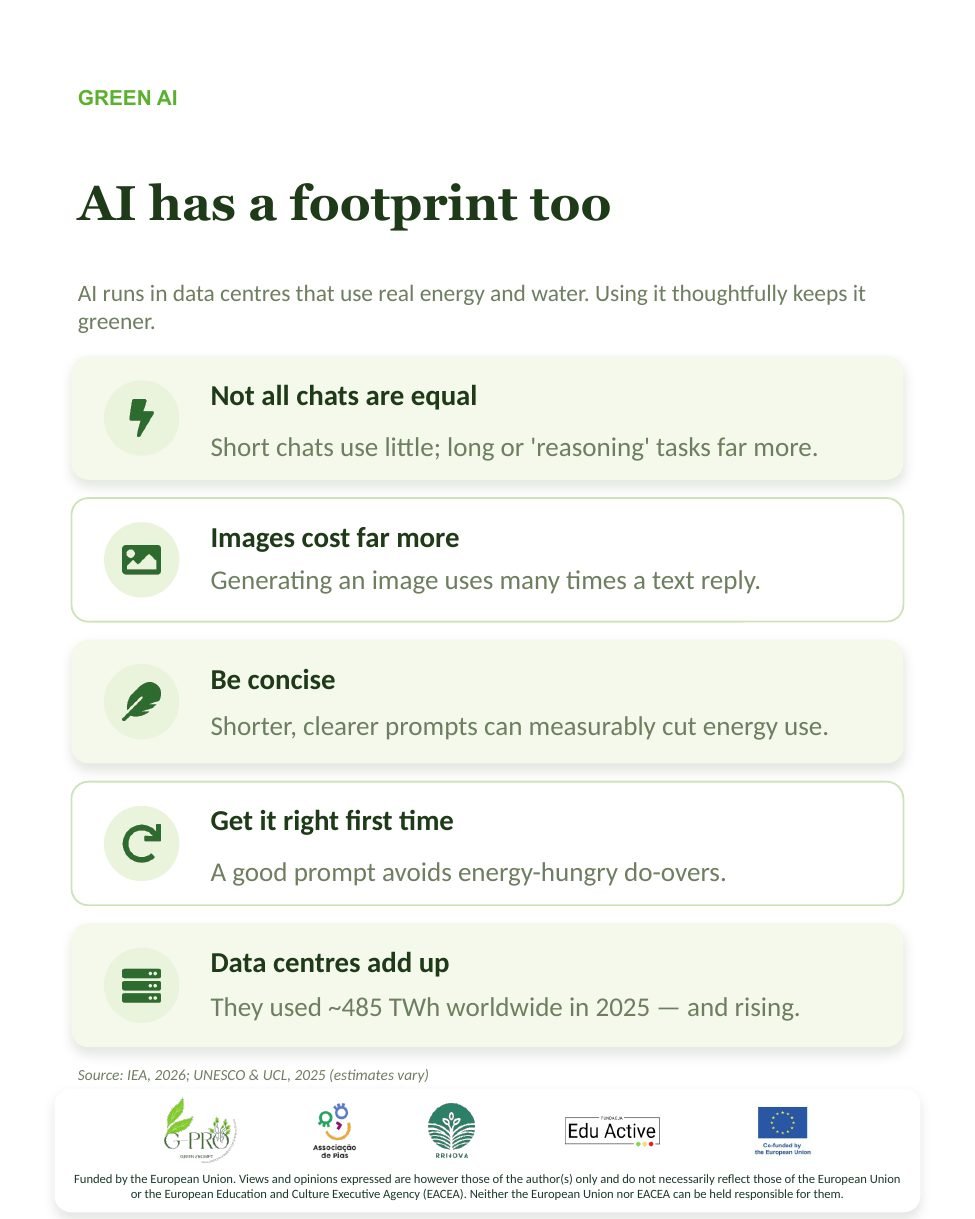
AI runs in data centres that use real energy and water. Here is what that means, and simple prompting habits that help keep your AI use greener.
Read more →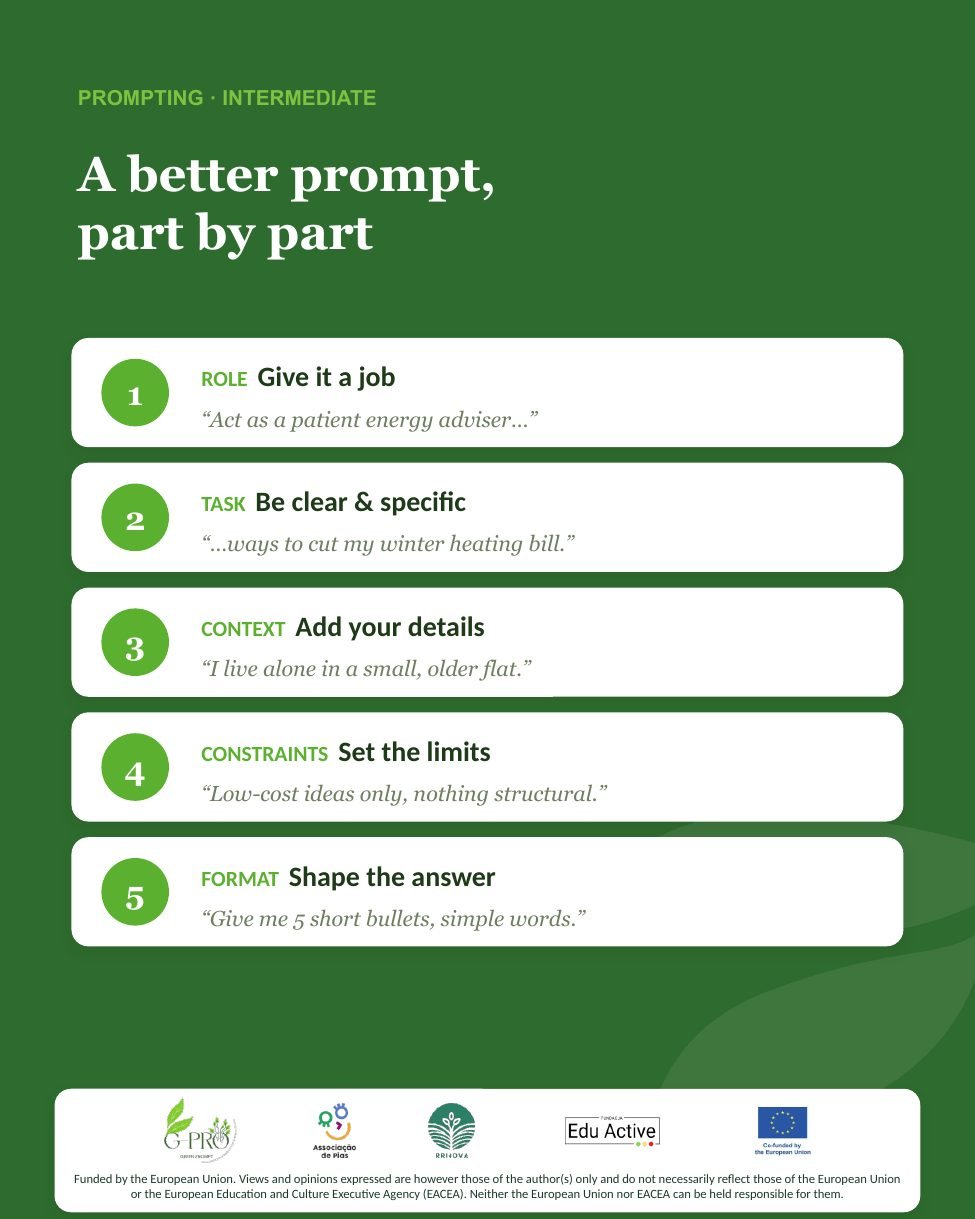
Role, task, context, constraints and format: five simple building blocks that turn a vague question into a prompt that gets useful, personal answers.
Read more →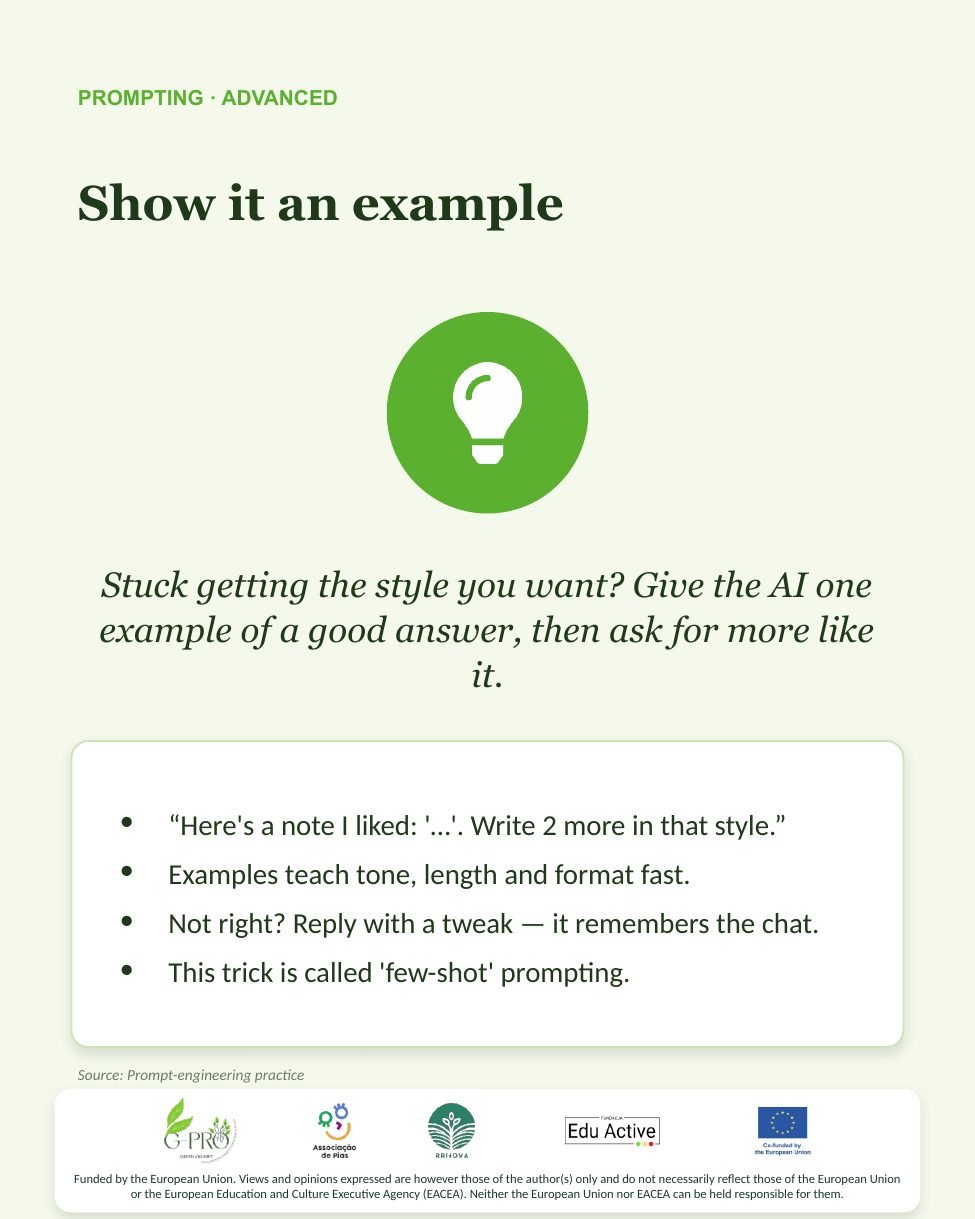
Not getting the tone or length you want from AI? Give it one good example and ask for more like it. This technique is called few-shot prompting.
Read more →
Your green habits and your AI skills work well together. Here are five everyday ways an AI assistant can help you waste less, save energy and get involved locally.
Read more →
Scammers now use AI to clone voices and fake messages. A few simple habits help you stay calm, check the facts and protect yourself and your money.
Read more →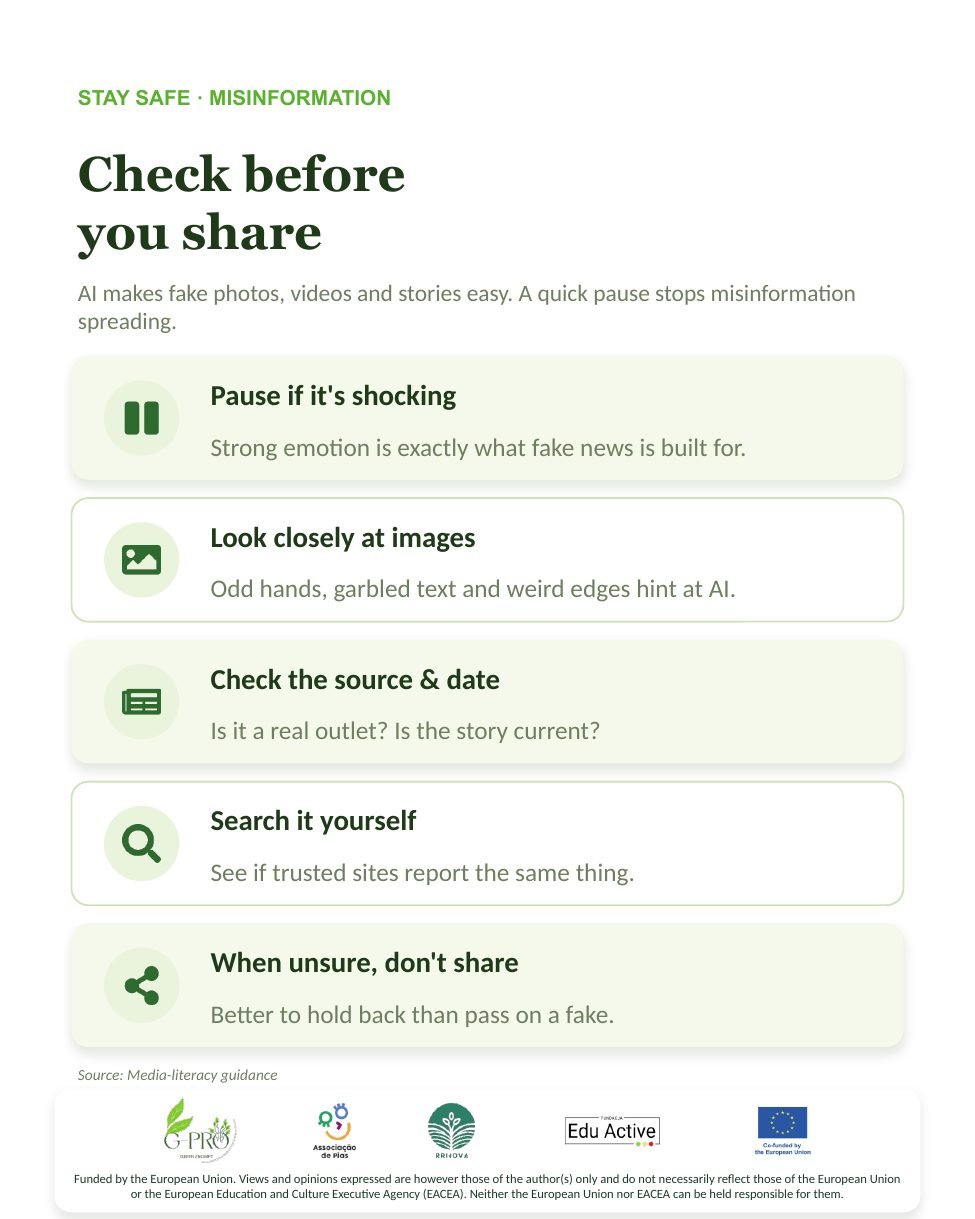
AI makes fake photos, videos and stories easy to create. Five simple checks help you spot fakes and avoid passing them on to friends and family.
Read more →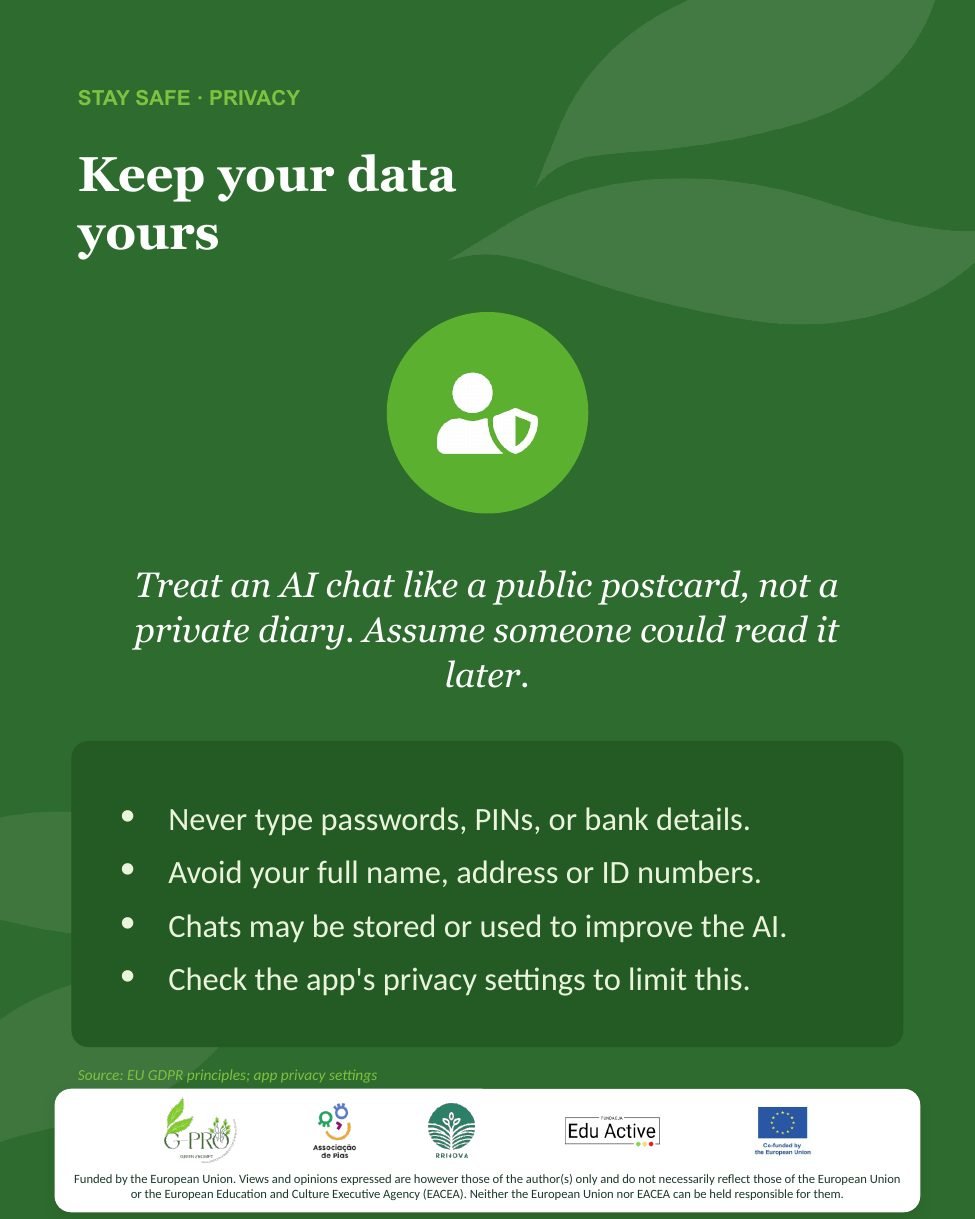
Treat an AI chat like a public postcard, not a private diary. Here is what to keep out of your chats and how to take more control of your privacy.
Read more →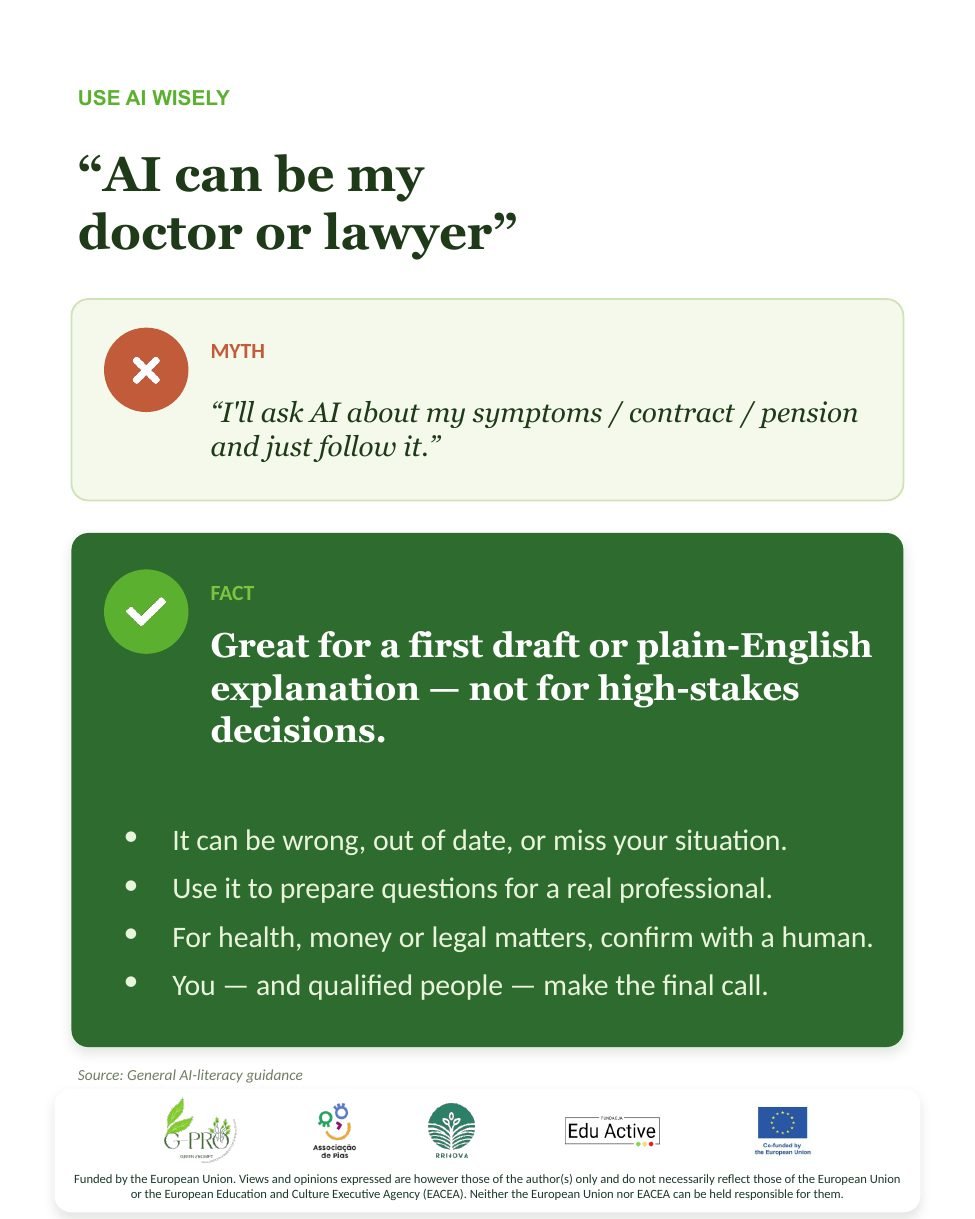
AI is great for plain-English explanations and preparing questions, but not for high-stakes decisions about health, money or the law. Here is how to use it wisely.
Read more →For dates and registration, contact the partner in your country (see the Helpdesk).
A two-day training for adult educators from Portugal, Estonia and Poland, hosted by Fundacja Edu Active in Poland: sustainability topics, game-based learning, the physical and digital game, and the handbook.
The second issue of the G-PRO newsletter.
Five weekly sessions of 2.5 hours in Portugal, Estonia and Poland: AI and sustainability, the board game, G-PRO Online, everyday use, and a final session with certificates.
“Empowering Seniors with AI & Sustainability Knowledge”: one event in each partner country for seniors, educators, policymakers and sustainability and AI professionals.
| Welcome | Registration and welcome coffee |
| Introduction | Overview of the G-PRO project and its objectives |
| Panel discussion | AI, sustainability and education: challenges and opportunities in adult education |
| Break | Coffee and networking |
| Interactive session | G-PRO board game demonstration and AI learning |
| Discussion | How game-based learning supports motivation and memory |
| Closing | Next steps and evaluation |
An online conference for educators and organisations across Europe: project results, best practice from educators and senior learners, keynote speakers and networking.