
A better prompt, part by part
Role, task, context, constraints and format: five simple building blocks that turn a vague question into a prompt that gets useful, personal answers.
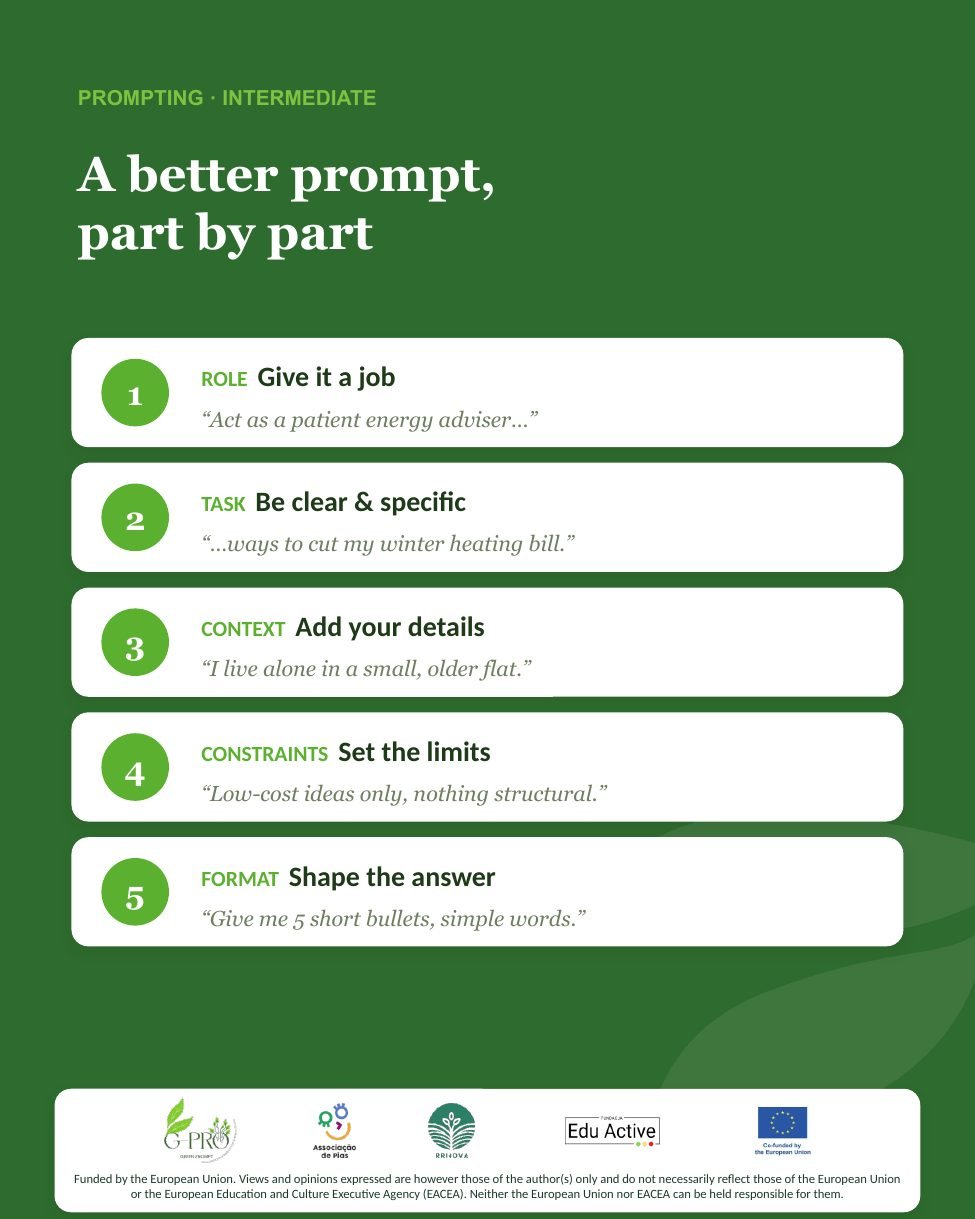
The quality of an AI answer depends a great deal on the question you ask. A short, vague prompt usually gets a general, one-size-fits-all reply. A prompt built from a few clear parts gets an answer that fits your life.
You do not need to use every part every time, but knowing them gives you a reliable toolkit. Here they are, using the example of cutting a winter heating bill.
1. Role: give it a job
Start by telling the AI who to be. For example: "Act as a patient energy adviser…" A role helps set the tone and the kind of knowledge the answer draws on. "Patient" is a useful word, too: it encourages a calm, clear explanation.
2. Task: be clear and specific
Next, say exactly what you want: "…ways to cut my winter heating bill." A clear task stops the AI from guessing what you mean.
3. Context: add your details
This is where your answer becomes personal. "I live alone in a small, older flat." Your situation matters. Advice for a large family house is very different from advice for a small flat, so a few details save a lot of back-and-forth. Just remember to keep private information, such as your address, out of it.
4. Constraints: set the limits
Tell the AI what to avoid or stay within: "Low-cost ideas only, nothing structural." Constraints keep the answer realistic for your budget, your home and your energy levels.
5. Format: shape the answer
Finally, say how you want the answer laid out: "Give me 5 short bullets, simple words." This makes the reply easier to read, print or share, and stops it from becoming a long wall of text.
Putting it all together
Combine the five parts and you get: "Act as a patient energy adviser. Suggest ways to cut my winter heating bill. I live alone in a small, older flat. Low-cost ideas only, nothing structural. Give me 5 short bullets, simple words."
Learn more
The G-PRO Handbook chapter on writing good prompts explores the ASK step in depth, with many more examples. The G-PRO board game also gives you plenty of chances to practise building better prompts together.
More from G-PRO

What AI actually is (and what it isn't)
AI can feel mysterious, but the basic idea is simple. Here is a plain-language look at how today's AI works, what it cannot do, and why you stay in charge.
Read more →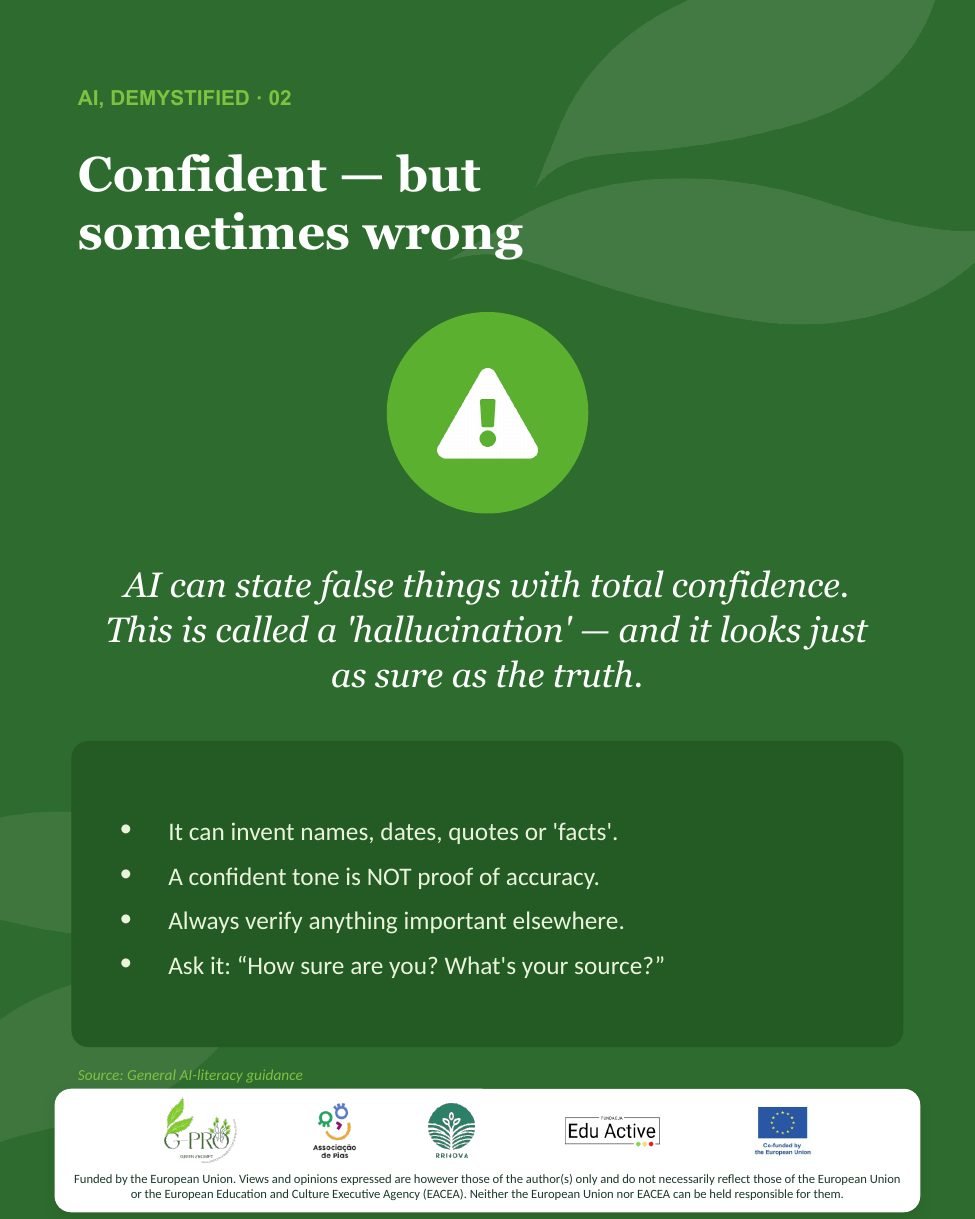
Confident, but sometimes wrong: understanding AI "hallucinations"
AI can state false things with total confidence. Learn what a hallucination is, why a sure tone is not proof, and simple ways to check what AI tells you.
Read more →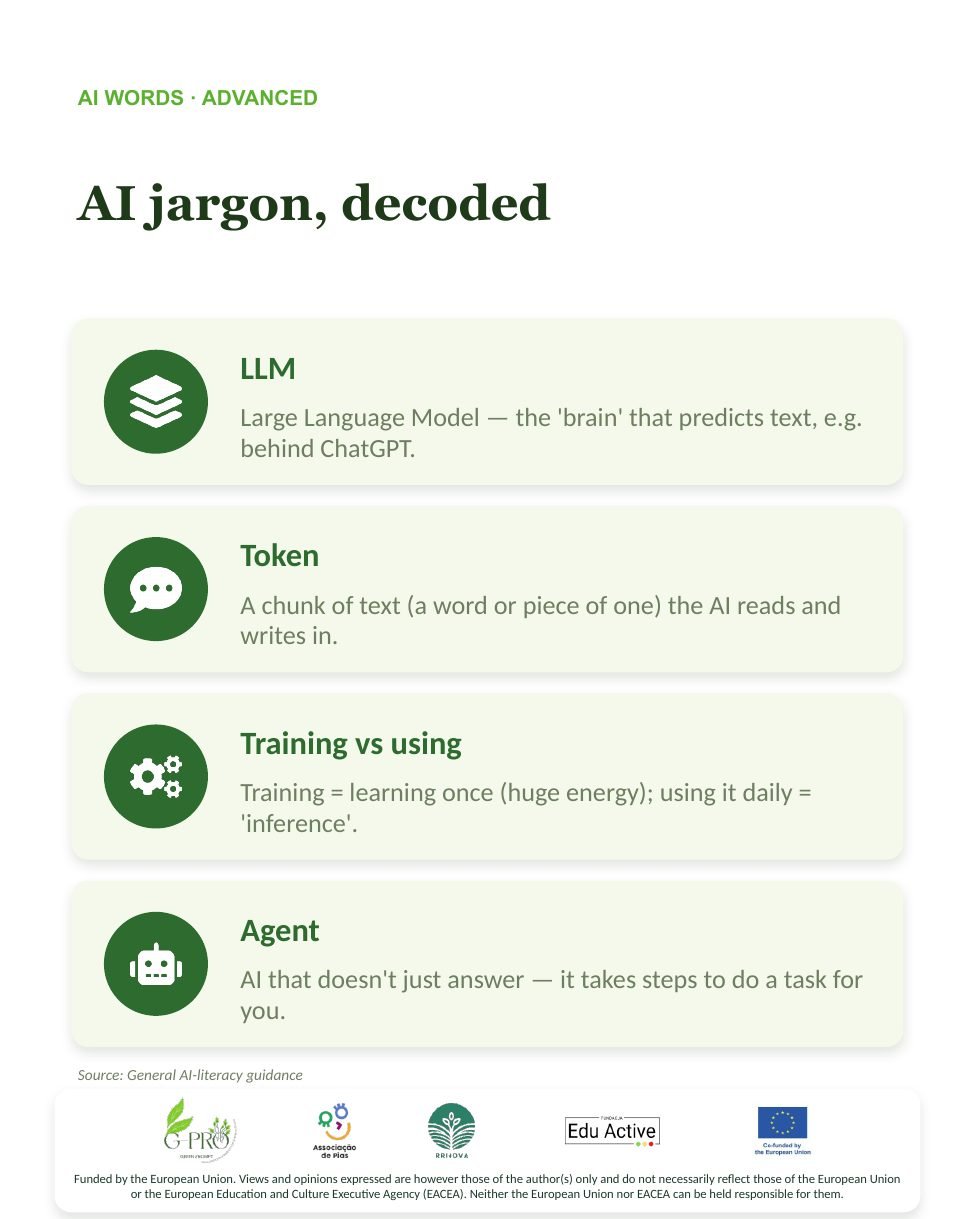
AI jargon, decoded: four words worth knowing
LLM, token, inference, agent: AI comes with a lot of new vocabulary. Here are four common terms explained in plain language.
Read more →