
Check before you share: a quick pause against misinformation
AI makes fake photos, videos and stories easy to create. Five simple checks help you spot fakes and avoid passing them on to friends and family.
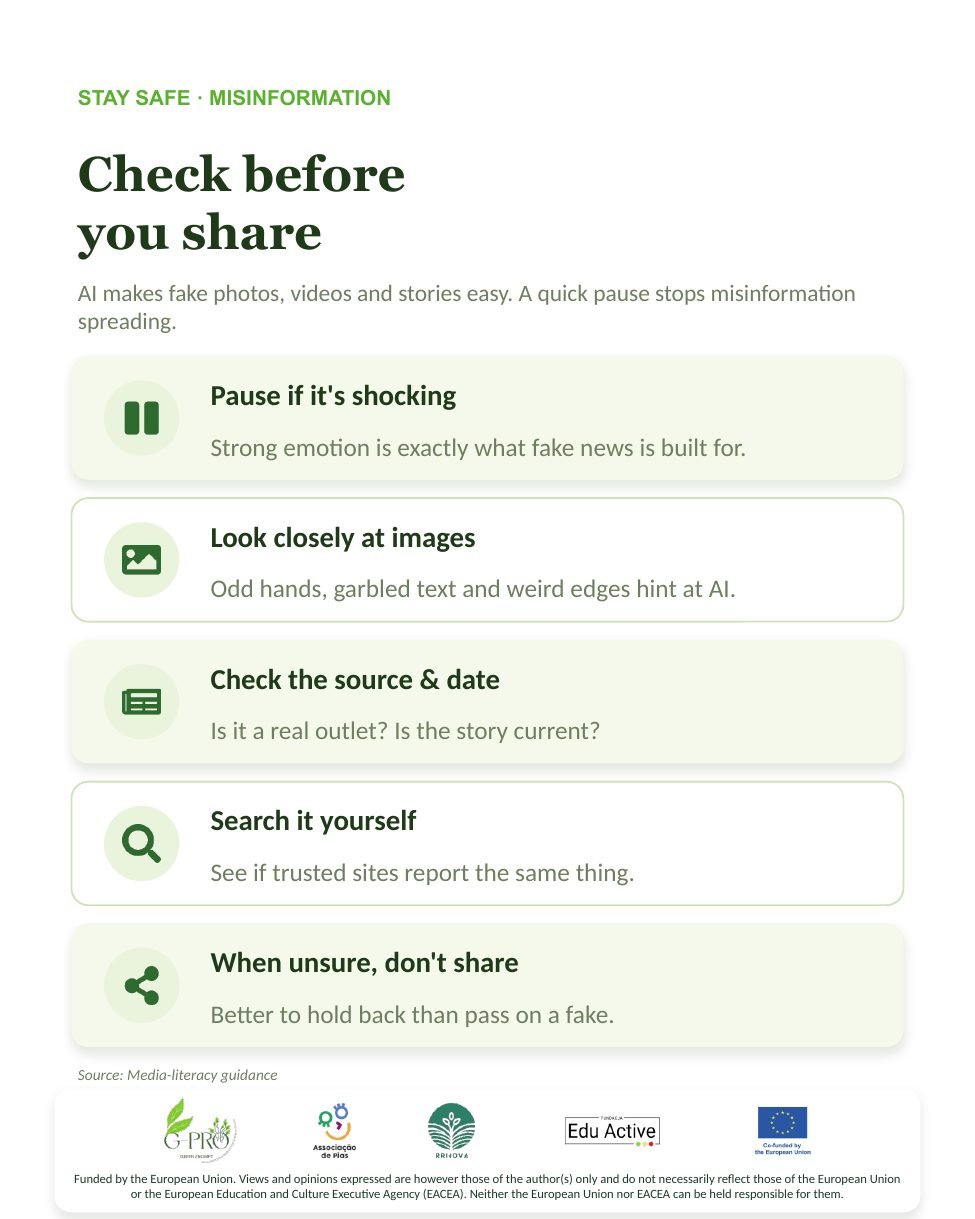
We all like to pass on interesting news, a striking photo or a moving story to friends and family. But AI makes fake photos, videos and stories easy to produce, and they can spread very quickly through messaging groups and social media. A quick pause before you press "share" stops misinformation spreading.
Here are five simple checks.
Pause if it's shocking
If something makes you angry, frightened or amazed, that is the moment to slow down. Strong emotion is exactly what fake news is built for. It pushes us to react and share before we think. Take a breath and give yourself a minute before doing anything.
Look closely at images
AI-made pictures are getting better, but they often contain clues. Look for odd hands, such as too many fingers, garbled text on signs or labels, and weird edges where objects or people blend into the background. Zooming in on a phone or tablet can make these details easier to see. Newer fakes may show none of these clues, so a normal-looking picture is not proof that it is real.
Check the source and date
Ask yourself: is this from a real news outlet that I recognise? Is the story current, or is it old news being passed round again as if it were new? A message forwarded many times, with no clear source, deserves extra care.
Search it yourself
See if trusted sites report the same thing. If a big event has really happened, reliable news organisations usually cover it. If you can only find the story in one place, or only on social media, be cautious. You can also ask a family member or friend who is comfortable online to help you look.
When unsure, don't share
It is always better to hold back than to pass on a fake. Not sharing costs you nothing, while sharing something false can worry people or spread harmful ideas. If you have already shared something that turns out to be false, a short follow-up message to say so helps too.
Learn more
The G-PRO Handbook chapters on thinking critically about AI answers and on staying safe and private online with AI offer more ways to spot fakes. The G-PRO board game lets you practise these checks with others in a friendly setting.
Source: Media-literacy guidance
More from G-PRO

What AI actually is (and what it isn't)
AI can feel mysterious, but the basic idea is simple. Here is a plain-language look at how today's AI works, what it cannot do, and why you stay in charge.
Read more →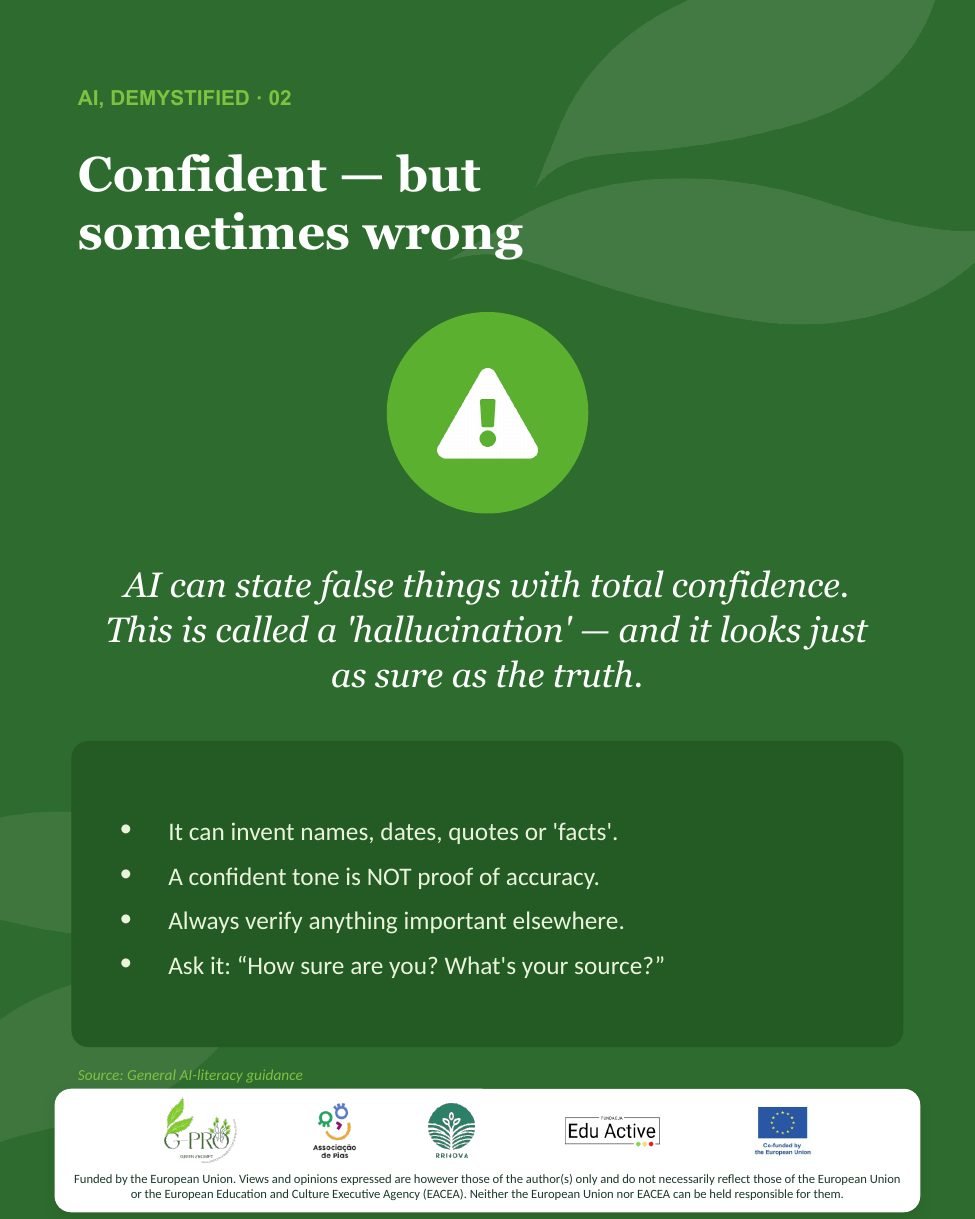
Confident, but sometimes wrong: understanding AI "hallucinations"
AI can state false things with total confidence. Learn what a hallucination is, why a sure tone is not proof, and simple ways to check what AI tells you.
Read more →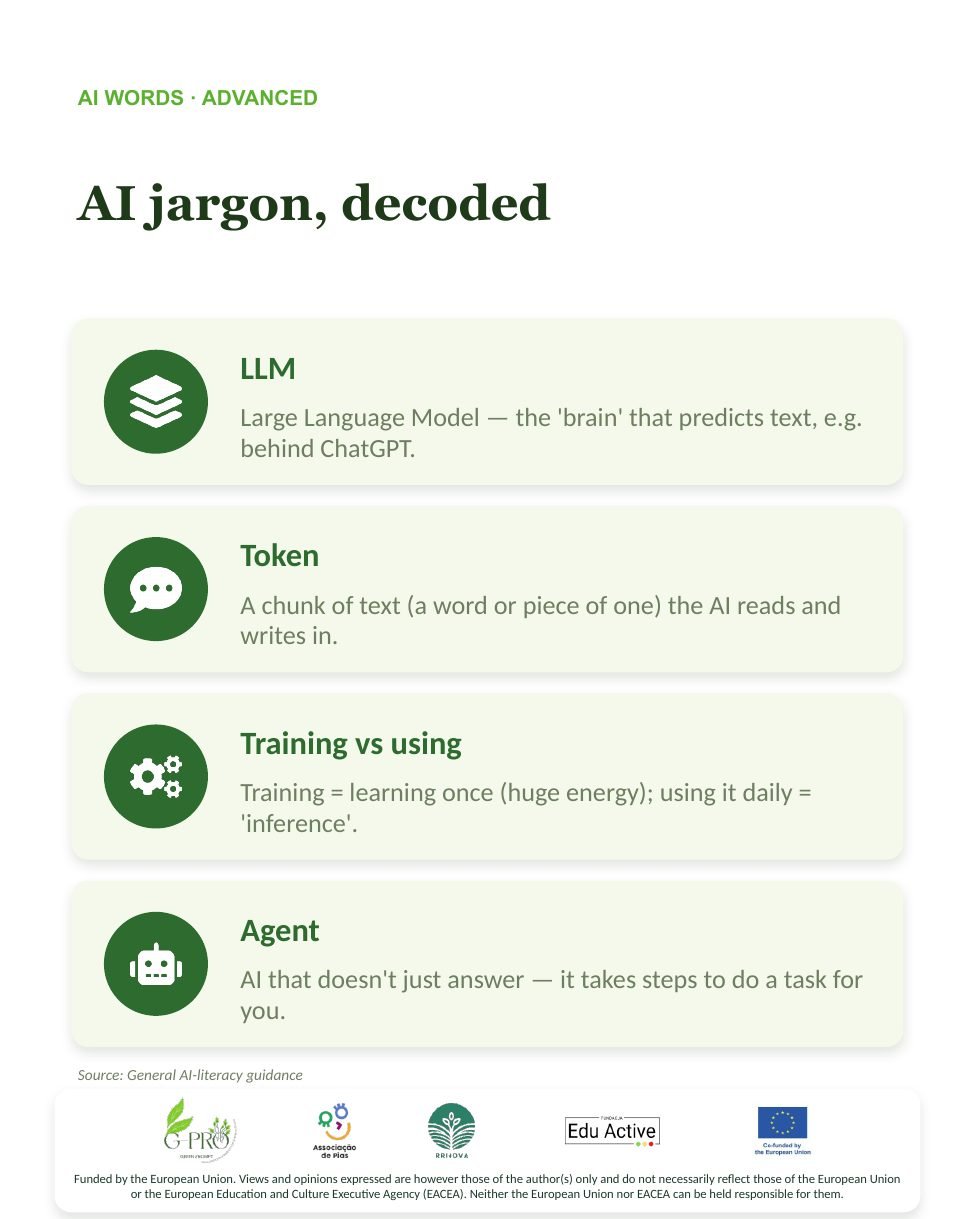
AI jargon, decoded: four words worth knowing
LLM, token, inference, agent: AI comes with a lot of new vocabulary. Here are four common terms explained in plain language.
Read more →