
Spot AI scams and fakes: five habits that keep you safe
Scammers now use AI to clone voices and fake messages. A few simple habits help you stay calm, check the facts and protect yourself and your money.

Scams are nothing new, but the tools behind them have changed. Scammers now use AI to clone voices and fake messages, which can make a trick far more convincing than an old-fashioned phishing email. The good news is that a few steady habits keep you safe, whatever technology the scammer uses.
Voices can be faked
AI can copy a familiar voice from just seconds of audio. A short clip from a video or voicemail may be enough. This means that a call that sounds exactly like your grandson, daughter or friend is not, on its own, proof that it is really them.
Hang up and call back
If you receive a call or message along the lines of "It's me, I need money", stop. Hang up and call the person directly, on the number you already have for them, not one given in the message. A real family member does not mind you checking. Some families agree on a private code word to use in an emergency, which is another simple safeguard.
Beware urgency and secrecy
"Act now" and "keep it secret" are classic scam signals. Scammers want you to act before you have time to think or talk to anyone. Genuine banks, officials and loved ones give you time to check. If you feel rushed or pressured, treat that as a warning sign in itself.
Don't click links, and check with someone
Do not click links in unexpected messages, even if they look official. Go to the official website or app yourself instead, by typing the address you know or using the app already on your phone.
And if you are unsure, ask a trusted friend or family member. A second opinion is one of the best protections there is. There is no shame in checking: scammers are skilled, and anyone can be targeted.
Learn more
The G-PRO Handbook chapter on staying safe and private online with AI explains how to recognise scams, fake voices and fake messages in more detail. The G-PRO board game also includes safety questions you can talk through together.
Source: Consumer-safety guidance
More from G-PRO

What AI actually is (and what it isn't)
AI can feel mysterious, but the basic idea is simple. Here is a plain-language look at how today's AI works, what it cannot do, and why you stay in charge.
Read more →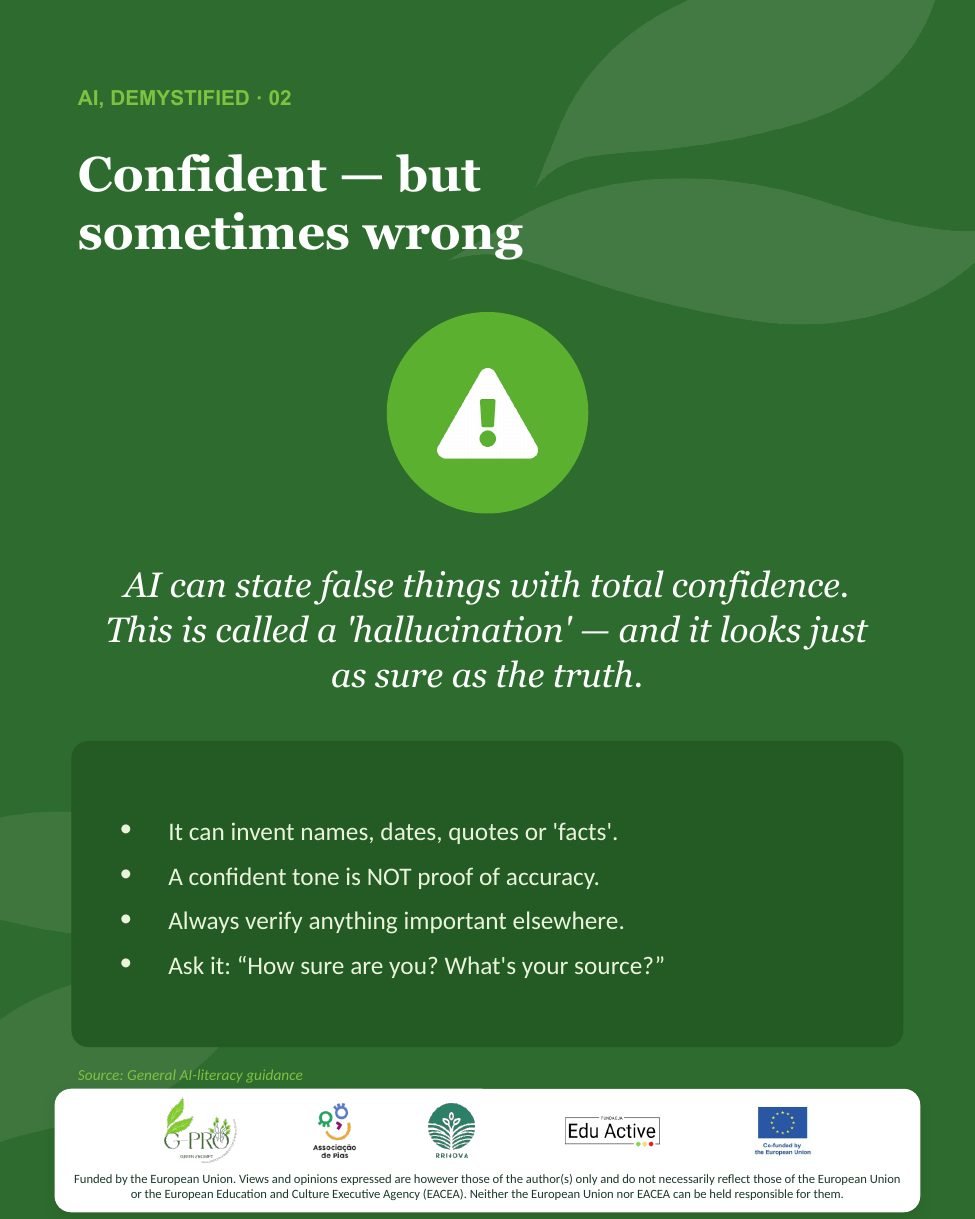
Confident, but sometimes wrong: understanding AI "hallucinations"
AI can state false things with total confidence. Learn what a hallucination is, why a sure tone is not proof, and simple ways to check what AI tells you.
Read more →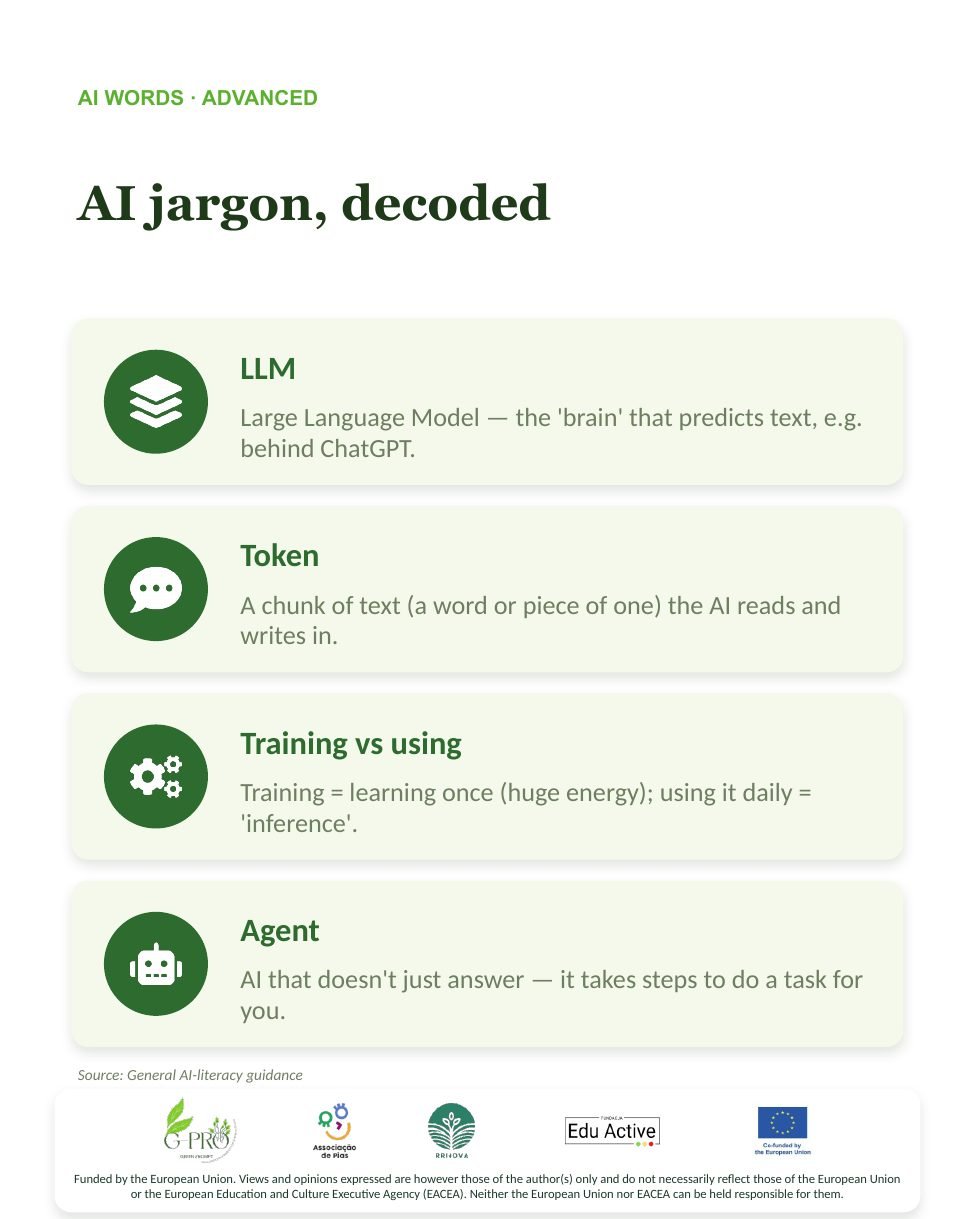
AI jargon, decoded: four words worth knowing
LLM, token, inference, agent: AI comes with a lot of new vocabulary. Here are four common terms explained in plain language.
Read more →