
Your clothes are (mostly) plastic
Most clothing sold in the EU is made from plastic fibres, and very little is ever recycled. Here is what that means, and how to buy less, buy better and make clothes last.
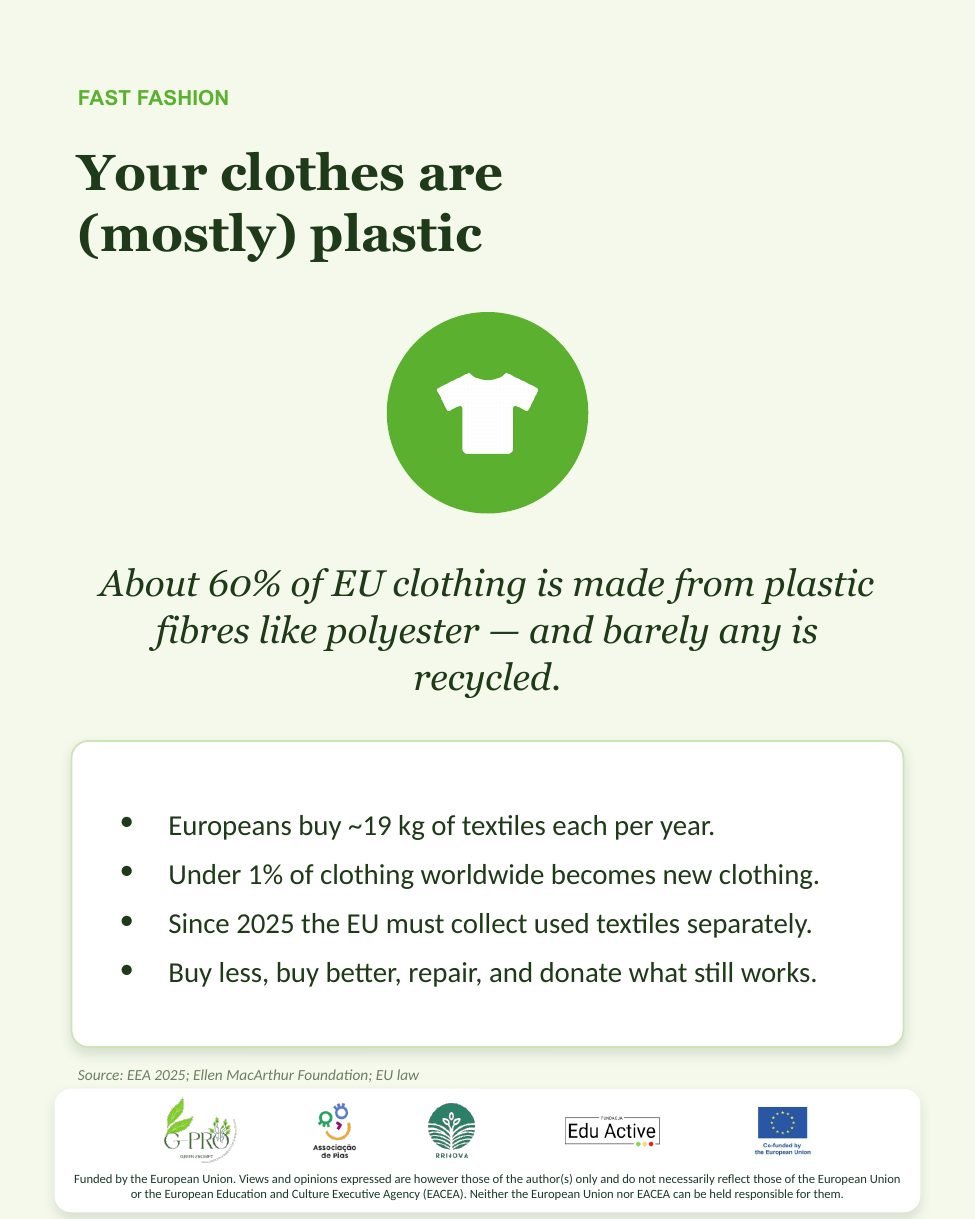
Take a look at the labels in your wardrobe. You may be surprised how often you see the word "polyester". Our G-PRO poster on fast fashion shows that much of what we wear is, in fact, plastic.
What our clothes are made of
About 60% of clothing in the EU is made from plastic fibres such as polyester, according to the European Environment Agency. These fibres are cheap and hard-wearing, which is one reason clothes have become so inexpensive and so plentiful.
The trouble comes at the end of a garment's life. Barely any of this clothing is recycled. Worldwide, under 1% of the material used for clothing is recycled into new clothing (Ellen MacArthur Foundation). Most of the rest is thrown away, and synthetic fabrics can last for a very long time once they are discarded.
How much we buy
Europeans buy around 19 kg of textiles each per year (EEA, 2022 data). It adds up to a great deal of material, much of it used for only a short time.
There is some good news. Since 2025, EU countries must collect used textiles separately. This means old clothes and fabrics should no longer simply go into the general rubbish. It is worth finding out how collection works where you live.
Buy less, buy better
The poster offers a simple guide, and it fits well with habits many older adults grew up with:
- Buy less. Before buying, ask yourself whether you really need it and how often you would wear it.
- Buy better. Choose well-made items that last, and check the fibre label.
- Repair. Sew on a button, mend a seam or darn a hole. Many people of earlier generations did this as a matter of course, and it is a skill worth sharing.
- Donate what still works. Clothes in good condition can go to a charity shop, a swap event or someone you know.
None of this needs to be expensive. In fact, buying less and repairing more usually saves money.
Learn more
For more on choosing well and avoiding waste, see the G-PRO Handbook chapter on shopping, food and spotting greenwashing, and the chapter on waste, repair and recycling. The G-PRO board game also includes questions on clothes and shopping habits, perfect for a lively group discussion.
Source: EEA 2025; Ellen MacArthur Foundation; EU law
More from G-PRO
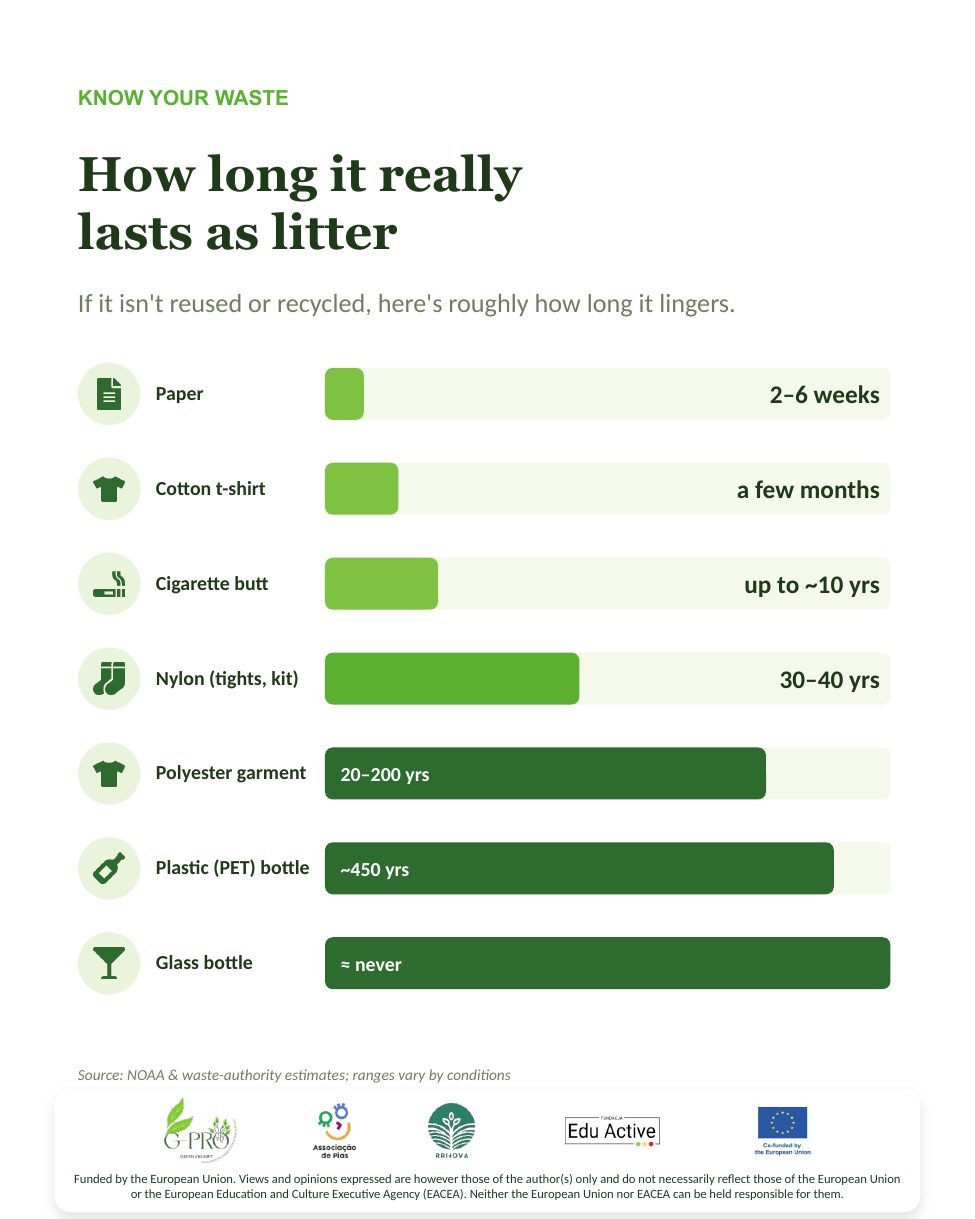
How long does litter really last?
A paper bag disappears in weeks, but a plastic bottle can linger for around 450 years. Knowing how long things last helps us choose what to reuse, recycle and avoid.
Read more →
Laundry and microplastics: five easy habits
Washing synthetic clothes releases tiny plastic fibres into our water. A few simple changes to how you wash and dry can cut this down.
Read more →
The water you can't see
Most of the water we use is hidden in the things we buy, from a cup of coffee to a pair of jeans. Discover your hidden water footprint and simple ways to reduce it.
Read more →