
How long does litter really last?
A paper bag disappears in weeks, but a plastic bottle can linger for around 450 years. Knowing how long things last helps us choose what to reuse, recycle and avoid.
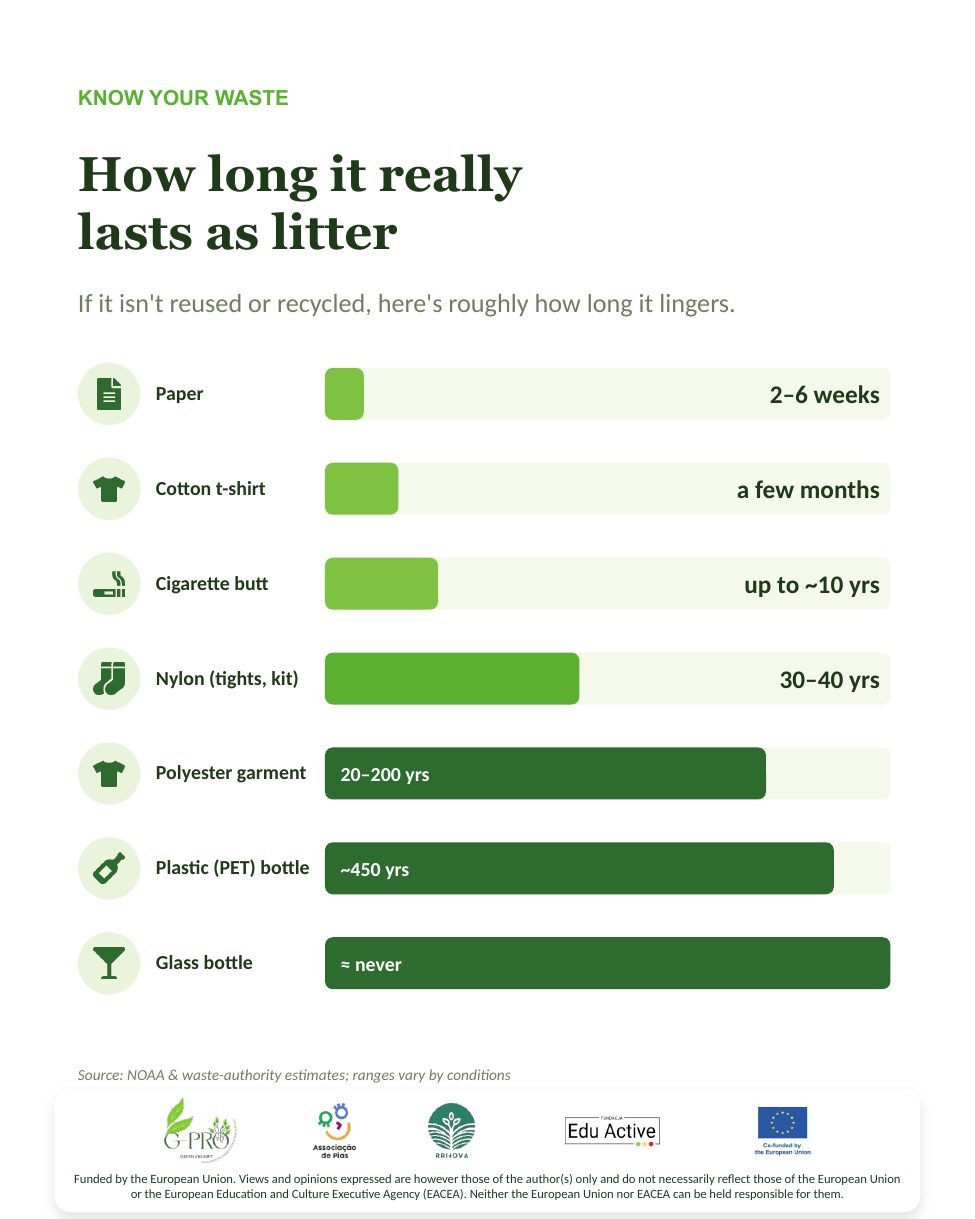
When something is dropped on a path or thrown into a hedge, it does not simply go away. If it is not reused or recycled, it stays in the environment, sometimes for a very long time. Our G-PRO poster sets out roughly how long everyday items linger as litter, and the differences are striking.
From weeks to centuries
Here are the approximate times shown on the poster:
| Item | Roughly how long it lasts |
|---|---|
| Paper | 2–6 weeks |
| Cotton t-shirt | a few months |
| Cigarette butt | up to around 10 years |
| Nylon (tights, sports kit) | 30–40 years |
| Polyester garment | 20–200 years |
| Plastic (PET) bottle | around 450 years |
| Glass bottle | practically never |
These are estimates. Real times depend on conditions such as sunlight, moisture and temperature, so the ranges vary. The overall picture is still clear: natural materials tend to break down in weeks, months or a few years, while plastics and glass stay with us for generations.
What the numbers tell us
A plastic bottle dropped today could still be around long after our great-great-grandchildren are grown. Clothes made from synthetic fibres such as nylon and polyester also last for decades. Even a small item like a cigarette butt can remain for years.
Glass is an interesting case. It practically never breaks down in nature, yet that same toughness makes it ideal for reusing, and glass can be recycled when it goes in the right bin. The problem is not the material itself but where it ends up.
Simple habits that help
- Reuse first. A sturdy bottle or jar can be refilled many times.
- Recycle properly. Put items in the right bin so they can become something new.
- Choose longer-lasting, natural materials where you can, especially for things you buy often.
- Never leave litter behind, and pick up a piece or two on your walk if you feel able.
- Pass on clothes that still have life in them, rather than throwing them away.
Learn more
You can read more about reducing, reusing and recycling in the G-PRO Handbook chapter on waste, repair and recycling. The G-PRO board game also brings these questions to the table, so you can talk them through with friends and learn together.
Source: NOAA & waste-authority estimates; ranges vary by conditions
More from G-PRO
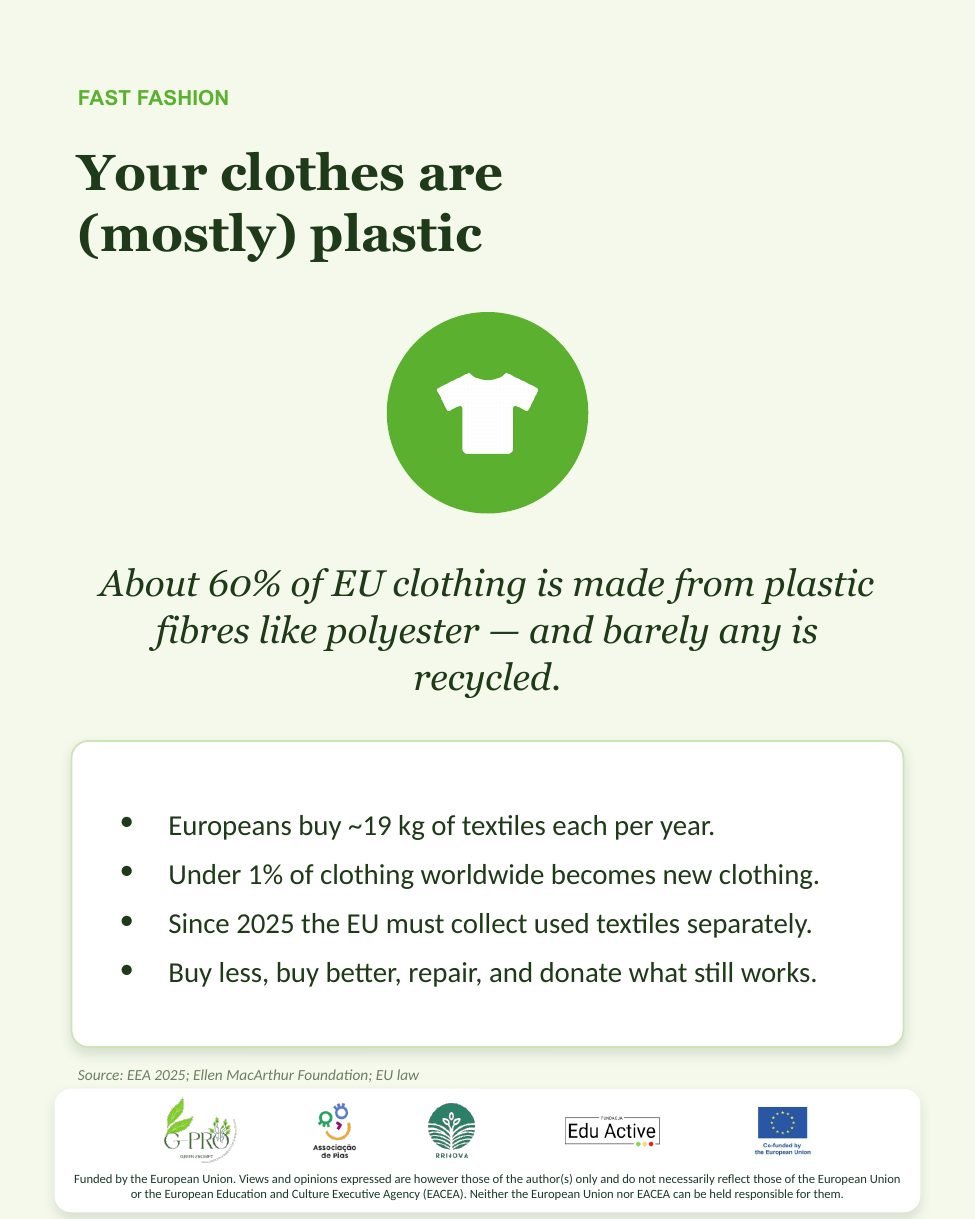
Your clothes are (mostly) plastic
Most clothing sold in the EU is made from plastic fibres, and very little is ever recycled. Here is what that means, and how to buy less, buy better and make clothes last.
Read more →
Laundry and microplastics: five easy habits
Washing synthetic clothes releases tiny plastic fibres into our water. A few simple changes to how you wash and dry can cut this down.
Read more →
The water you can't see
Most of the water we use is hidden in the things we buy, from a cup of coffee to a pair of jeans. Discover your hidden water footprint and simple ways to reduce it.
Read more →