
AI has a footprint too: how to use it more thoughtfully
AI runs in data centres that use real energy and water. Here is what that means, and simple prompting habits that help keep your AI use greener.
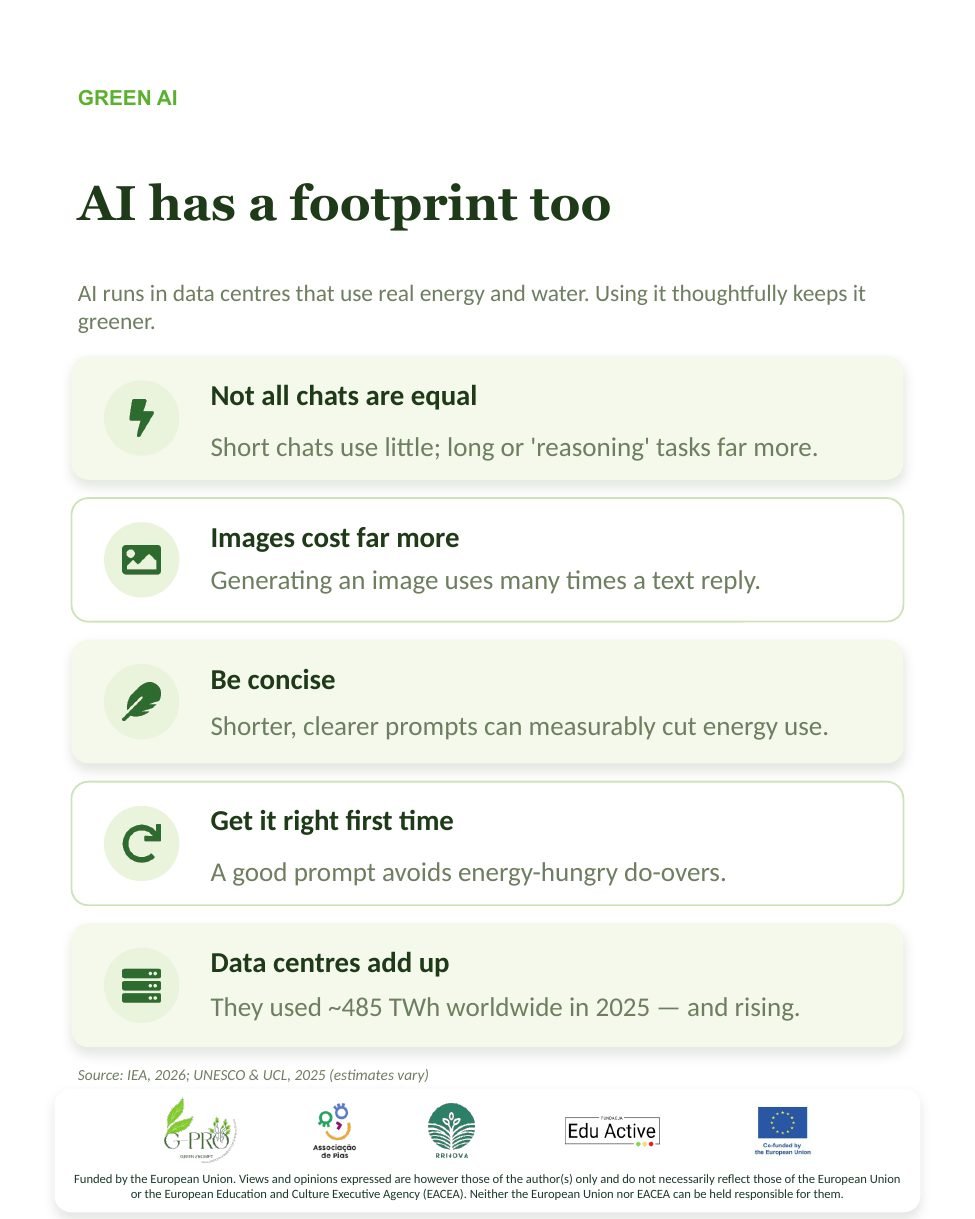
It is easy to think of AI as something that lives "in the cloud", weightless and invisible. In reality, AI runs in data centres: large buildings full of computers that use real energy and water. Every question we ask has a small cost. Using AI thoughtfully keeps it greener.
This is where the two halves of G-PRO meet: green habits and confident AI skills.
Every chat adds up
Not all chats are equal. Newer estimates suggest a short text chat uses roughly as much energy as a web search, while long answers, "reasoning" tasks and image generation use far more. Older estimates of about 10 times a search are now considered too high for simple questions. On its own, one chat is small. But many people asking many questions every day adds up.
Data centres used around 485 TWh worldwide in 2025, according to the International Energy Agency (IEA), and that figure is rising. Estimates vary, but the direction is clear: the more we rely on these services, the more it matters how we use them.
Images cost far more
Generating an image uses many times the energy of a text reply. Creating pictures for fun can be enjoyable, but it is worth asking whether you really need one, and whether a single, well-described request would do instead of many attempts.
Be concise and get it right first time
Shorter, clearer prompts can measurably cut energy use. A 2025 study for UNESCO by University College London found that shorter prompts and answers can cut the energy used by more than half. That does not mean being vague. It means saying what you need clearly, without unnecessary extras.
A good prompt also avoids energy-hungry do-overs. If you include your situation, what you want and how you would like the answer laid out, you are more likely to get a useful reply at the first try. Before you type, it helps to pause and ask yourself:
- Do I need AI for this, or could I look it up quickly another way?
- Have I given the key details in one clear message?
- Do I need a picture, or would words be enough?
Learn more
The G-PRO Handbook chapter on writing good prompts shows how to ask clear, specific questions, which saves both time and energy. The chapter on energy at home has more everyday energy habits, and the G-PRO board game brings green and AI questions together around one table.
Source: IEA, 2026; UNESCO & UCL, 2025 (estimates vary)
More from G-PRO
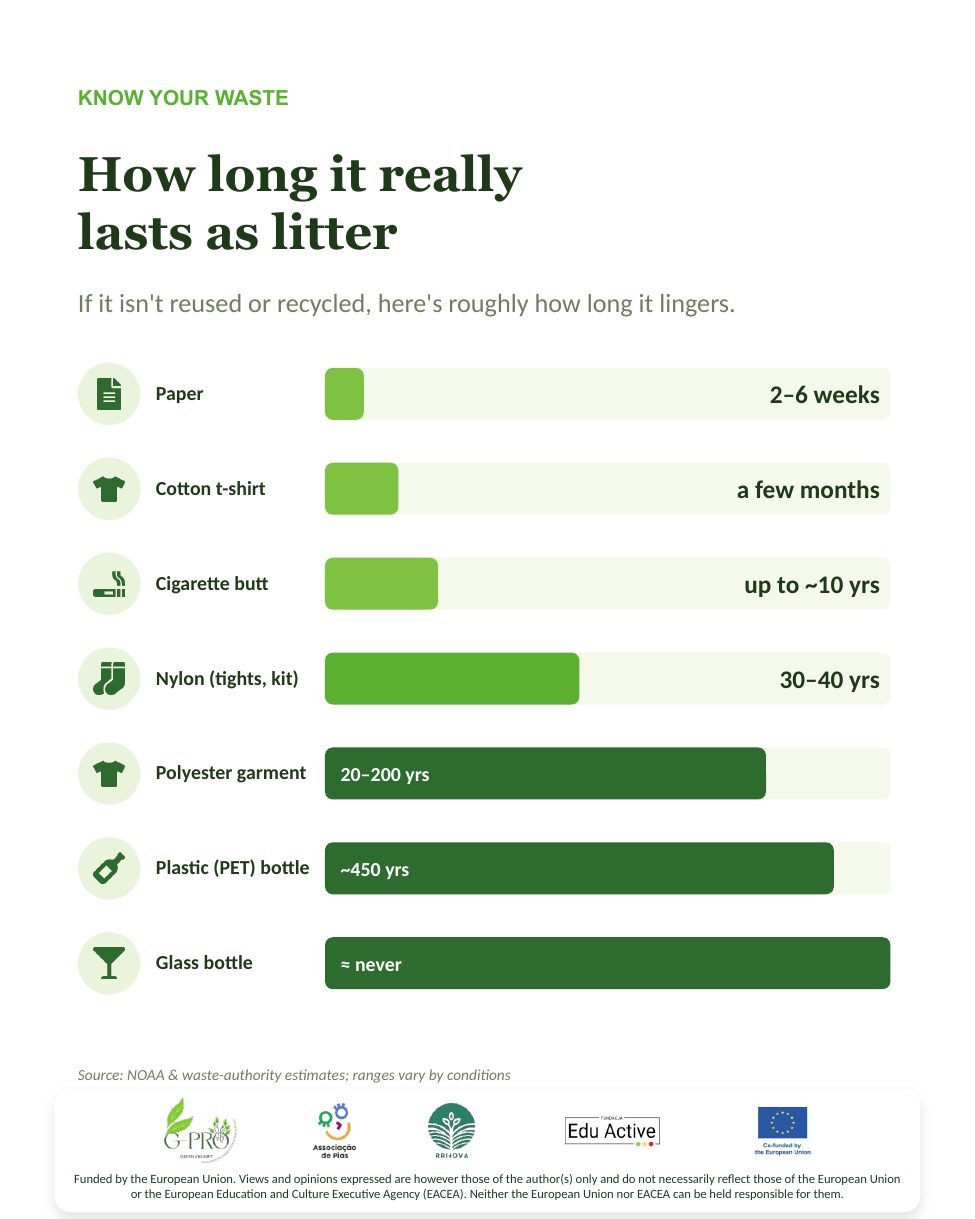
How long does litter really last?
A paper bag disappears in weeks, but a plastic bottle can linger for around 450 years. Knowing how long things last helps us choose what to reuse, recycle and avoid.
Read more →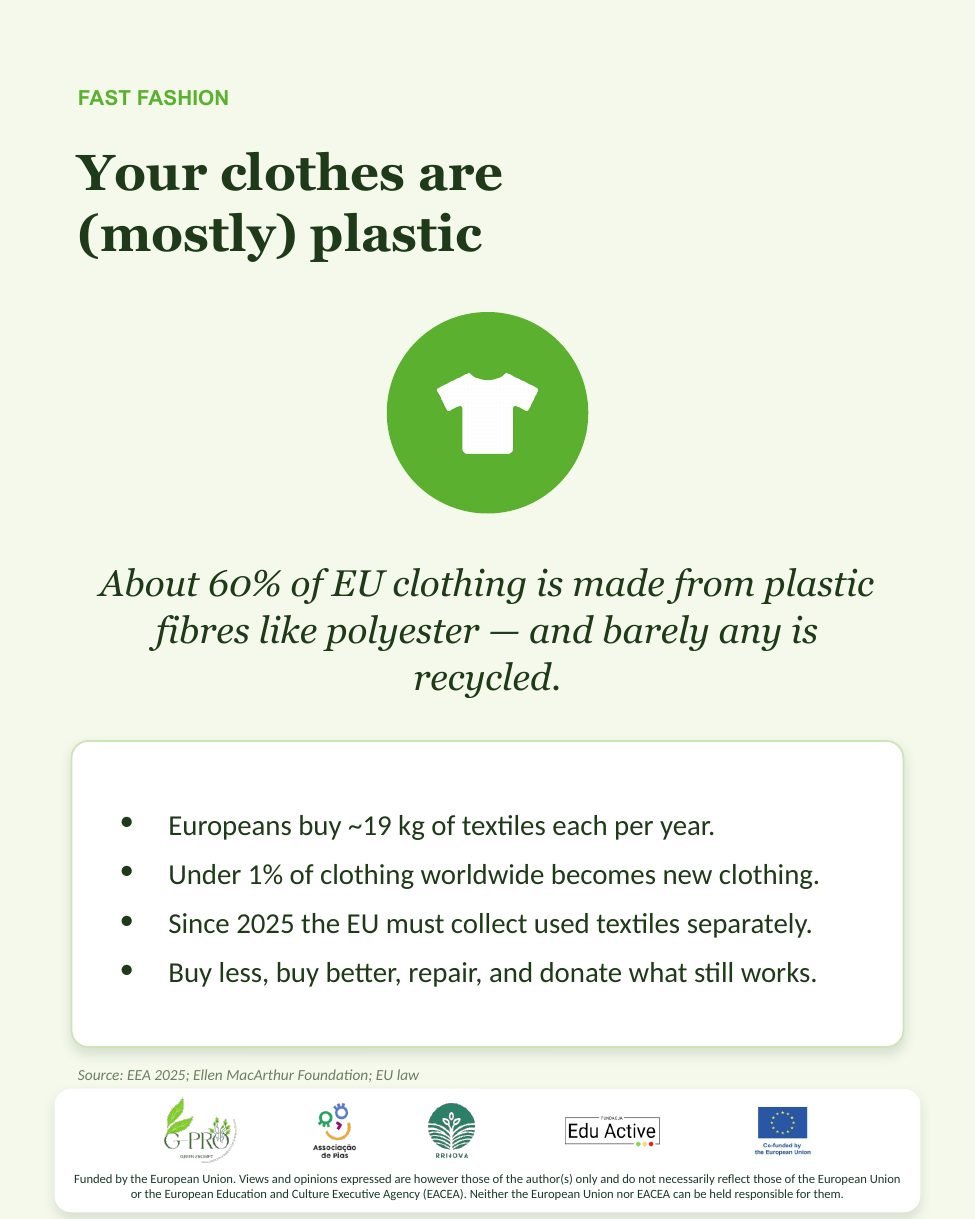
Your clothes are (mostly) plastic
Most clothing sold in the EU is made from plastic fibres, and very little is ever recycled. Here is what that means, and how to buy less, buy better and make clothes last.
Read more →
Laundry and microplastics: five easy habits
Washing synthetic clothes releases tiny plastic fibres into our water. A few simple changes to how you wash and dry can cut this down.
Read more →