
Best before or use by? Reading food dates with confidence
A "best before" date is about quality, while "use by" is about safety. Knowing the difference helps you save money and waste less food.
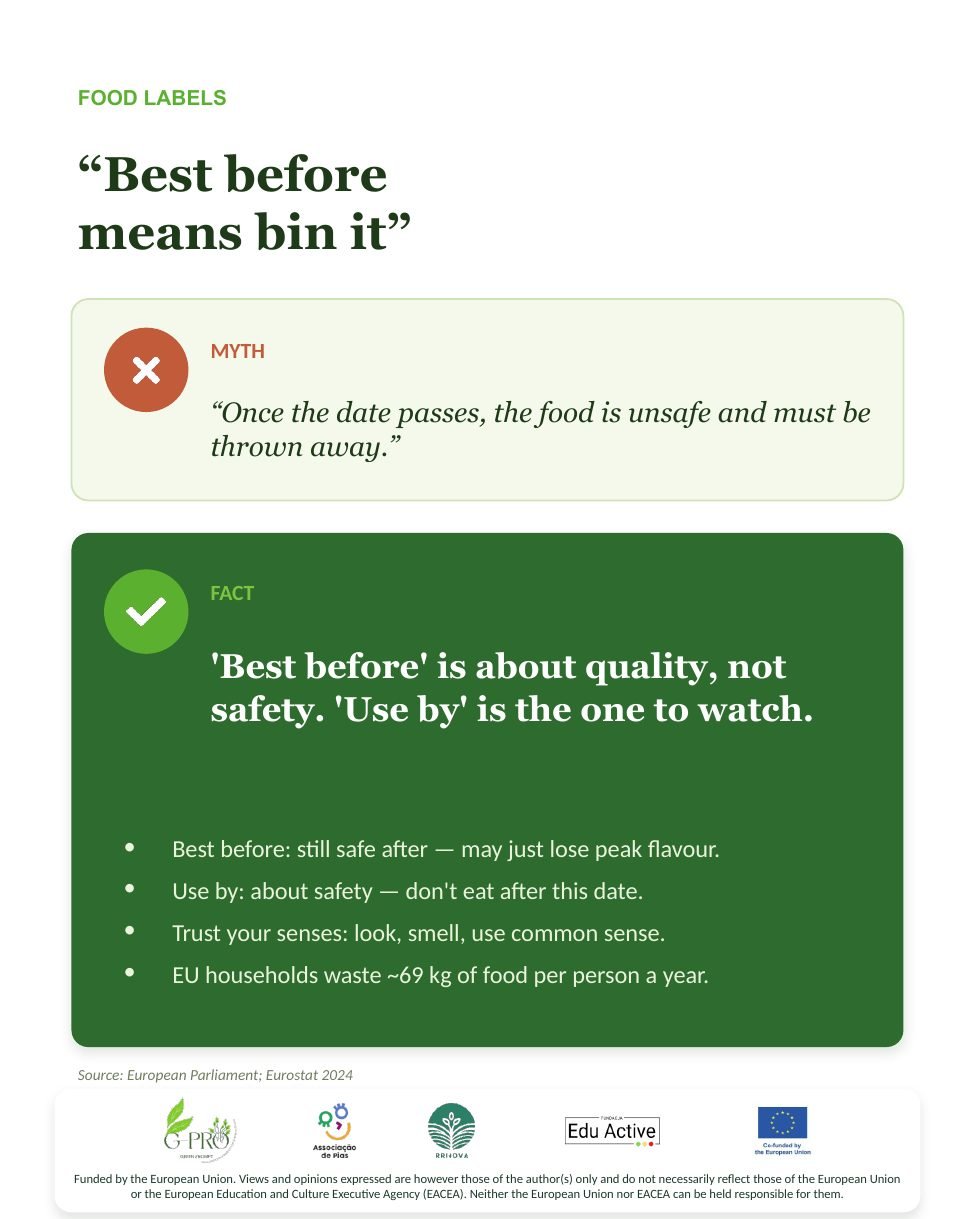
Have you ever thrown out a packet of biscuits or a tin of beans simply because the date had passed? You are not alone. Our G-PRO poster on food labels tackles one of the most common kitchen myths.
The myth
"Once the date passes, the food is unsafe and must be thrown away."
The fact
There are two different kinds of date on food, and they mean different things. "Best before" is about quality, not safety. "Use by" is the one to watch.
Two dates, two meanings
Best before
Food is still safe after its "best before" date. It may simply lose its peak flavour or texture. Biscuits might be a little less crisp, or crisps a little less crunchy, but they are usually perfectly fine to eat if they have been stored properly.
Use by
"Use by" is about safety. Do not eat food after this date, even if it looks and smells fine. You will often find it on fresh foods such as meat, fish and some dairy products.
Trust your senses
For foods with a "best before" date, trust your senses. Look at it, smell it and use common sense. Many people of earlier generations judged food this way all their lives, and it remains a useful skill. If something looks or smells wrong, do not eat it.
Why it matters
EU households waste around 69 kg of food per person a year (Eurostat, 2024 data), out of about 129 kg of food wasted per person in total. Some of that is food thrown away too early because of confusion over dates. Understanding the labels is an easy way to save money and reduce waste at the same time.
A few habits help:
- Put newer food at the back of the cupboard or fridge, and older food at the front.
- Check "use by" dates when you unpack your shopping, and plan meals around them.
- Freeze food before its "use by" date if you cannot eat it in time, following the packaging guidance.
Learn more
For more on reducing food waste and shopping wisely, see the G-PRO Handbook chapter on shopping, food and spotting greenwashing. The G-PRO board game also includes myth-or-fact questions like this one, perfect for a friendly debate.
Source: European Parliament; Eurostat 2024
More from G-PRO
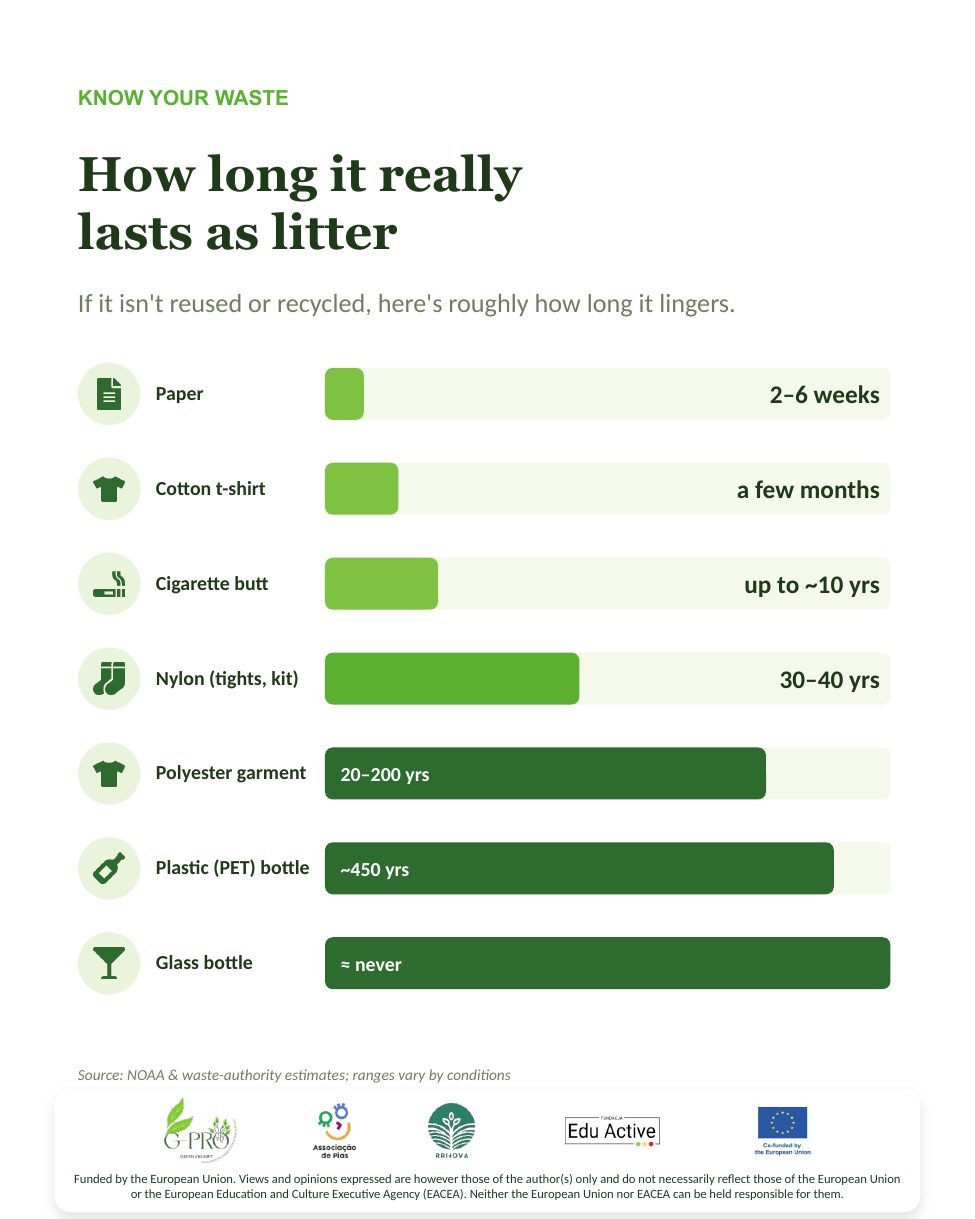
How long does litter really last?
A paper bag disappears in weeks, but a plastic bottle can linger for around 450 years. Knowing how long things last helps us choose what to reuse, recycle and avoid.
Read more →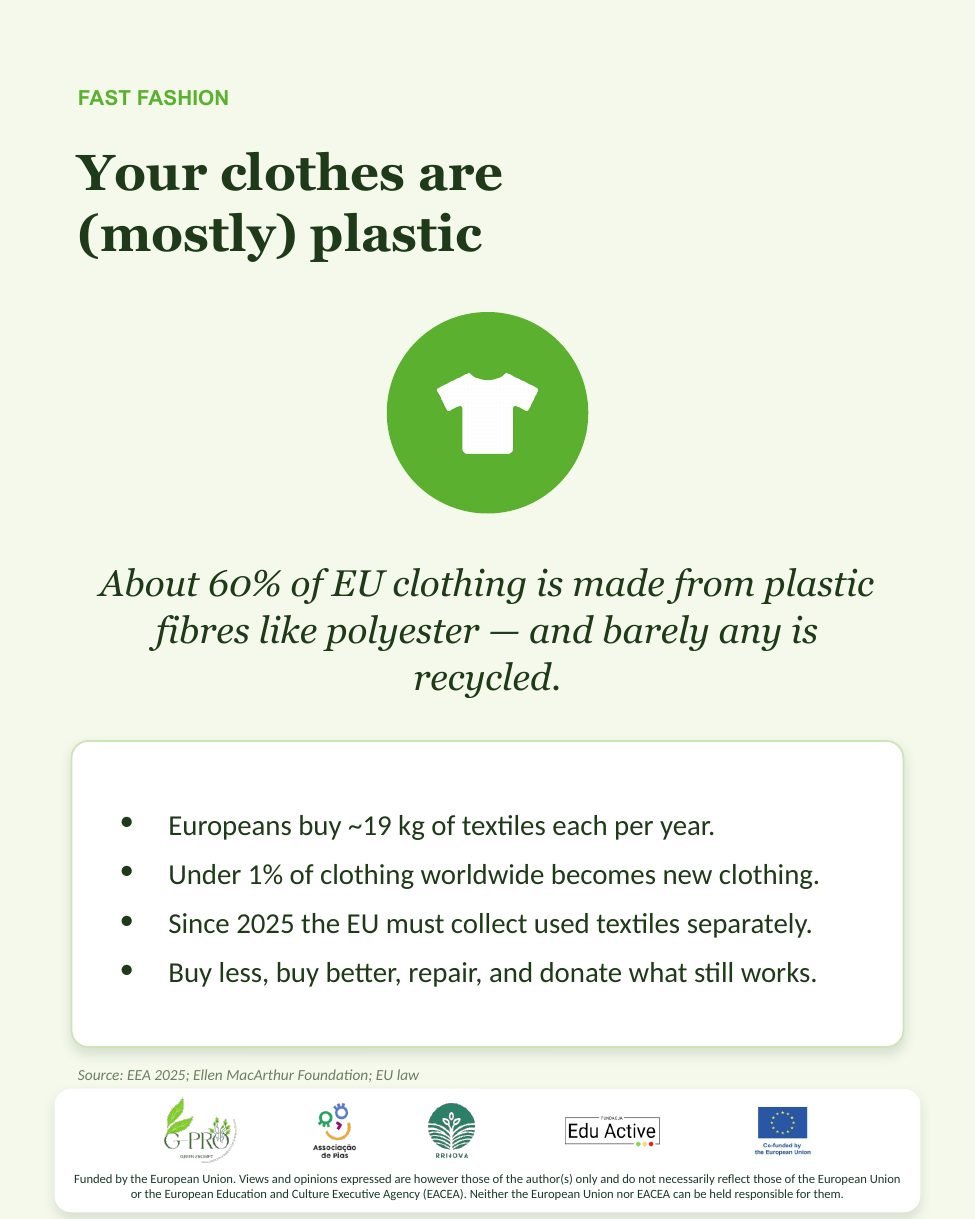
Your clothes are (mostly) plastic
Most clothing sold in the EU is made from plastic fibres, and very little is ever recycled. Here is what that means, and how to buy less, buy better and make clothes last.
Read more →
Laundry and microplastics: five easy habits
Washing synthetic clothes releases tiny plastic fibres into our water. A few simple changes to how you wash and dry can cut this down.
Read more →