
Biodegradable or compostable? Why the label matters
It is easy to think a biodegradable label means something will vanish or can go on the compost heap. Here is the real difference, and what to look for before composting.
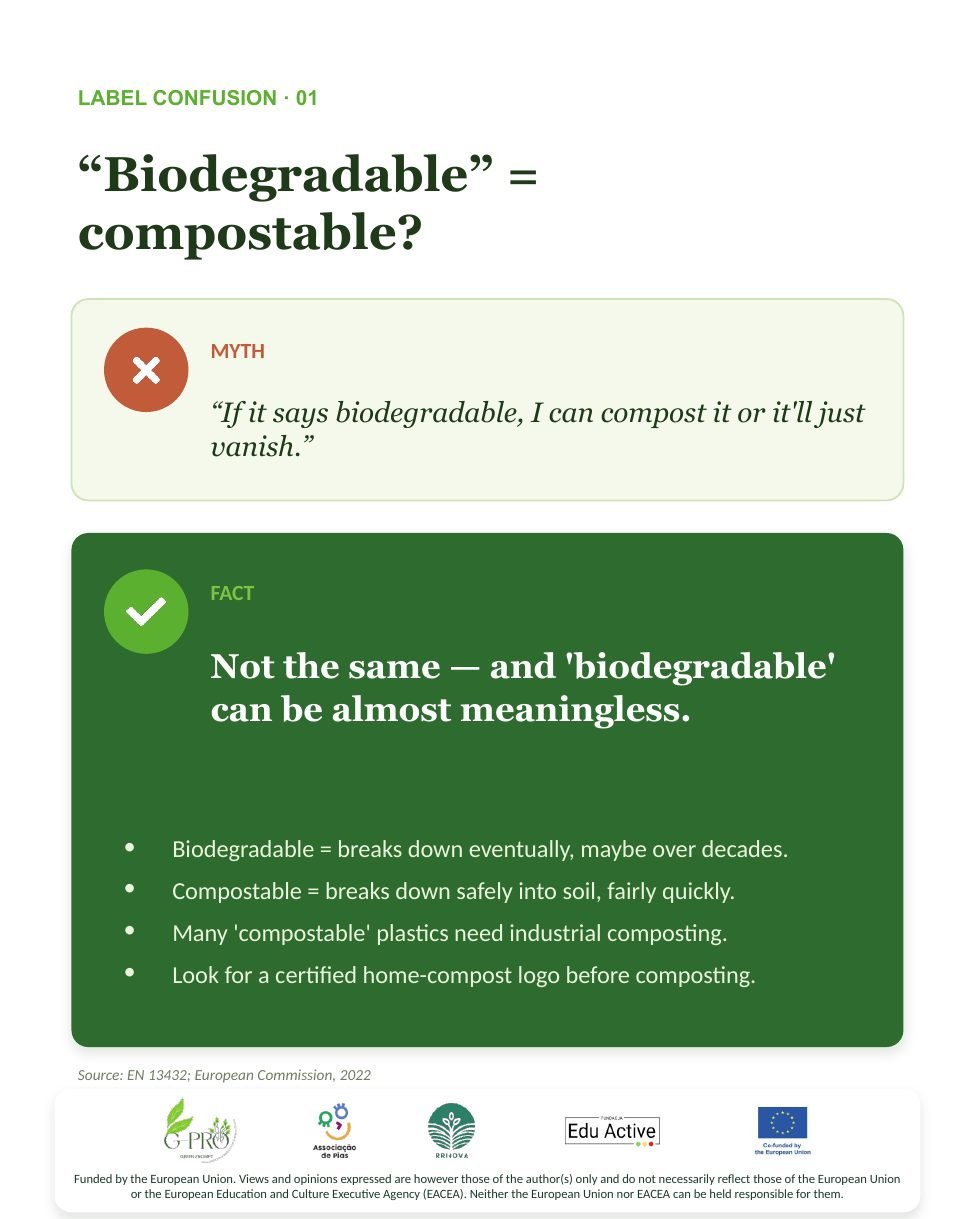
Packaging labels often use friendly words like "biodegradable" and "compostable". They sound reassuring, and many of us assume they mean the same thing. Our G-PRO poster on label confusion sets the record straight.
The myth
A common belief is: "If it says biodegradable, I can compost it, or it will just vanish."
The fact
The two words are not the same. In fact, "biodegradable" on its own can be almost meaningless.
- Biodegradable means something breaks down eventually. That could take decades.
- Compostable means something breaks down safely into soil, and fairly quickly, under the right conditions.
So a "biodegradable" bag dropped in a field may still be there for many years. The word tells you little about how long it takes or what it leaves behind.
Home or industrial composting?
Even "compostable" needs a closer look. Many compostable plastics need industrial composting. That means the high temperatures and controlled conditions of a large composting facility, which a garden compost heap cannot match. If you put these items on your heap at home, they may not break down properly.
The poster's advice is simple: look for a certified home-compost logo before composting anything at home. The European standard EN 13432 covers industrial composting, in large facilities that run much hotter than a garden heap; home-compost logos are certified separately. If an item does not carry a home-compost logo, check how your local area wants it disposed of.
Why labels can mislead
Words like "biodegradable" can make a product seem greener than it is. This is one form of greenwashing: a claim that sounds good but tells you very little. A healthy dose of curiosity helps. Ask yourself what the word really means, how long the process takes, and whether there is a certified logo to back it up.
The greenest choice is often to avoid single-use packaging altogether, by choosing loose produce, reusable bags and refillable containers where you can.
Learn more
You can read more about decoding labels in the G-PRO Handbook chapter on shopping, food and spotting greenwashing, and about composting in the chapter on waste, repair and recycling. The G-PRO board game also includes myth-or-fact questions like this one, perfect for testing your knowledge with friends.
Source: EN 13432; European Commission, 2022
More from G-PRO
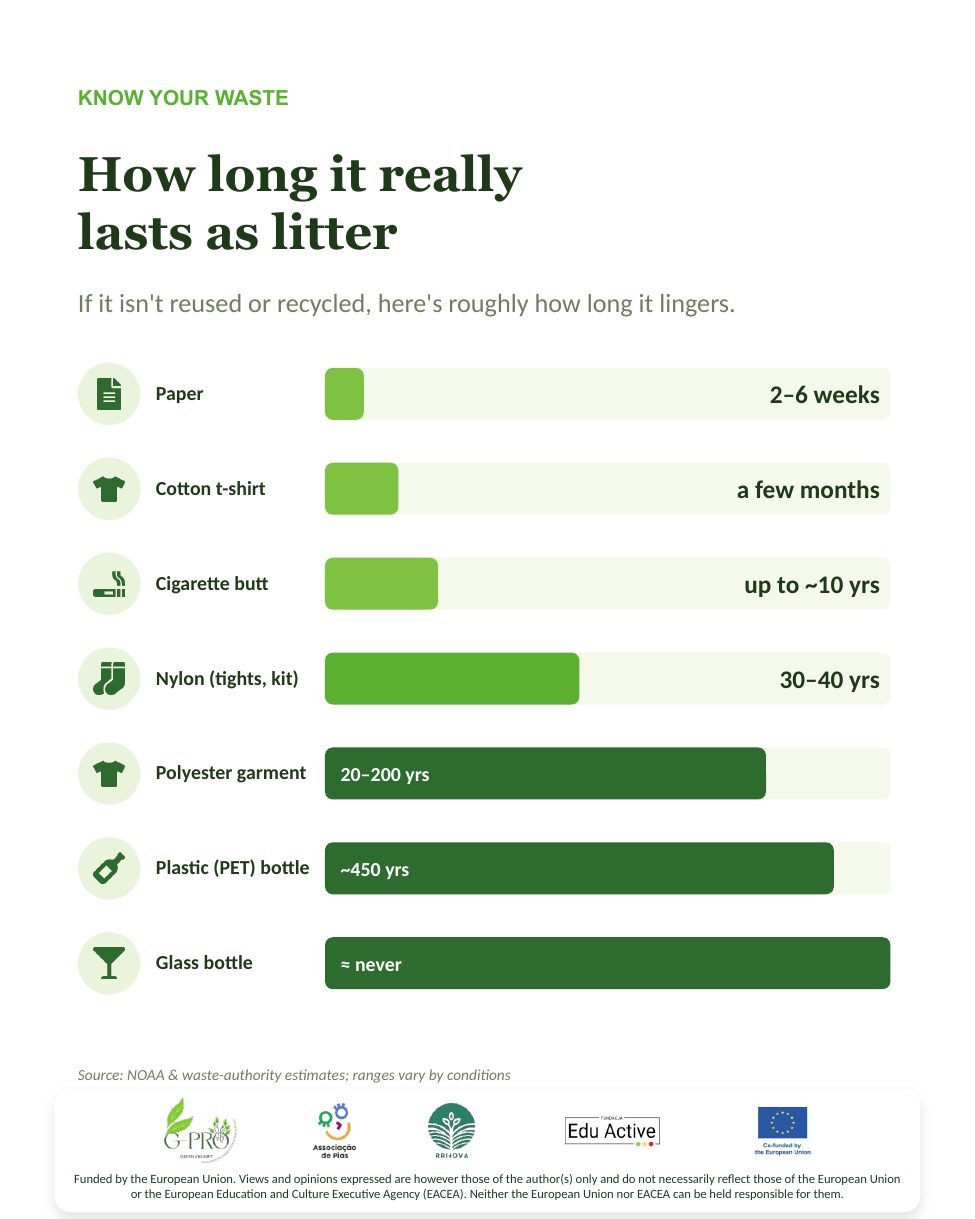
How long does litter really last?
A paper bag disappears in weeks, but a plastic bottle can linger for around 450 years. Knowing how long things last helps us choose what to reuse, recycle and avoid.
Read more →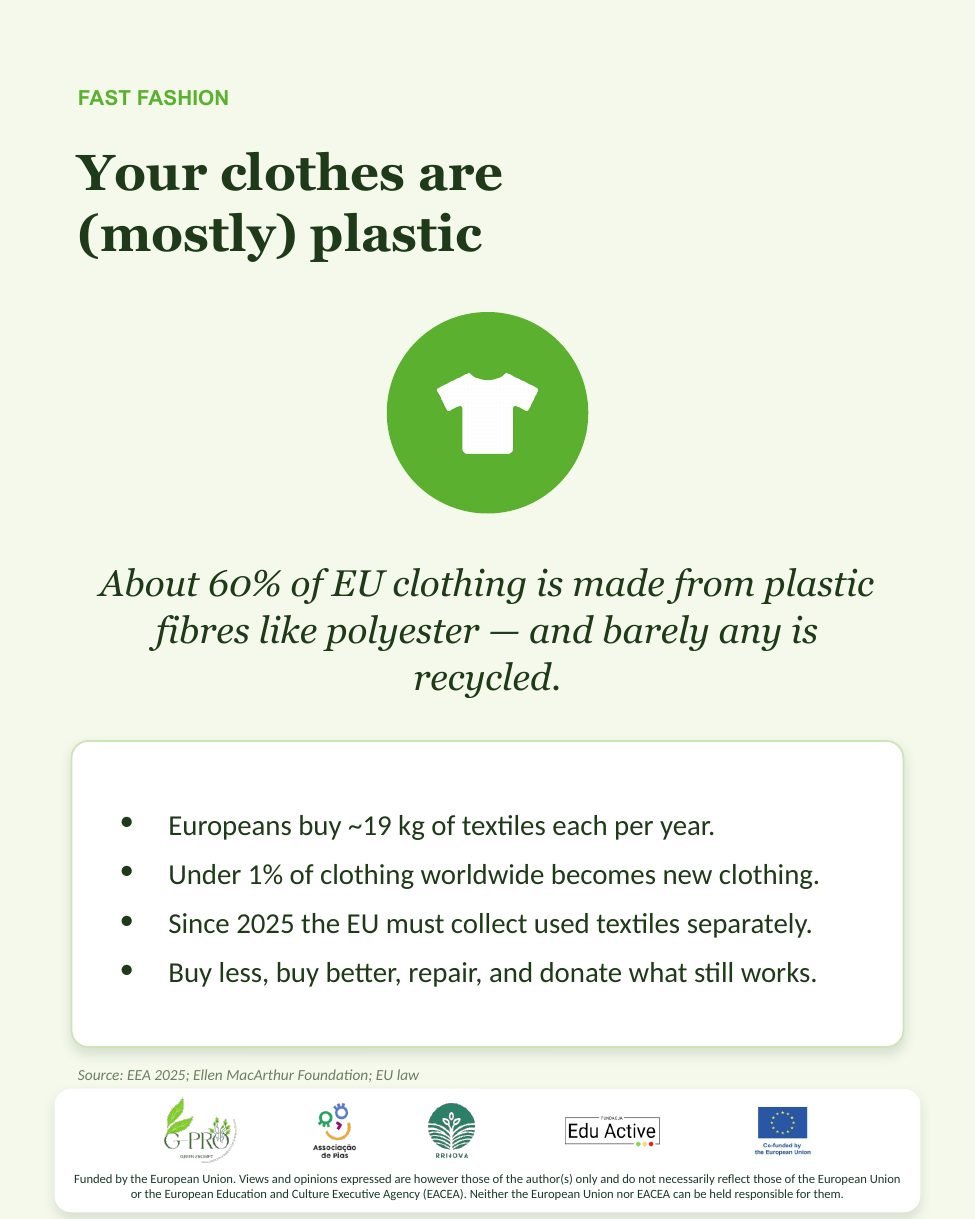
Your clothes are (mostly) plastic
Most clothing sold in the EU is made from plastic fibres, and very little is ever recycled. Here is what that means, and how to buy less, buy better and make clothes last.
Read more →
Laundry and microplastics: five easy habits
Washing synthetic clothes releases tiny plastic fibres into our water. A few simple changes to how you wash and dry can cut this down.
Read more →