
Repair beats replace
E-waste is one of the EU's fastest-growing waste streams, but the EU has adopted a Right to Repair law, which applies since July 2026. Here is how fixing things keeps them, and their materials, in use.
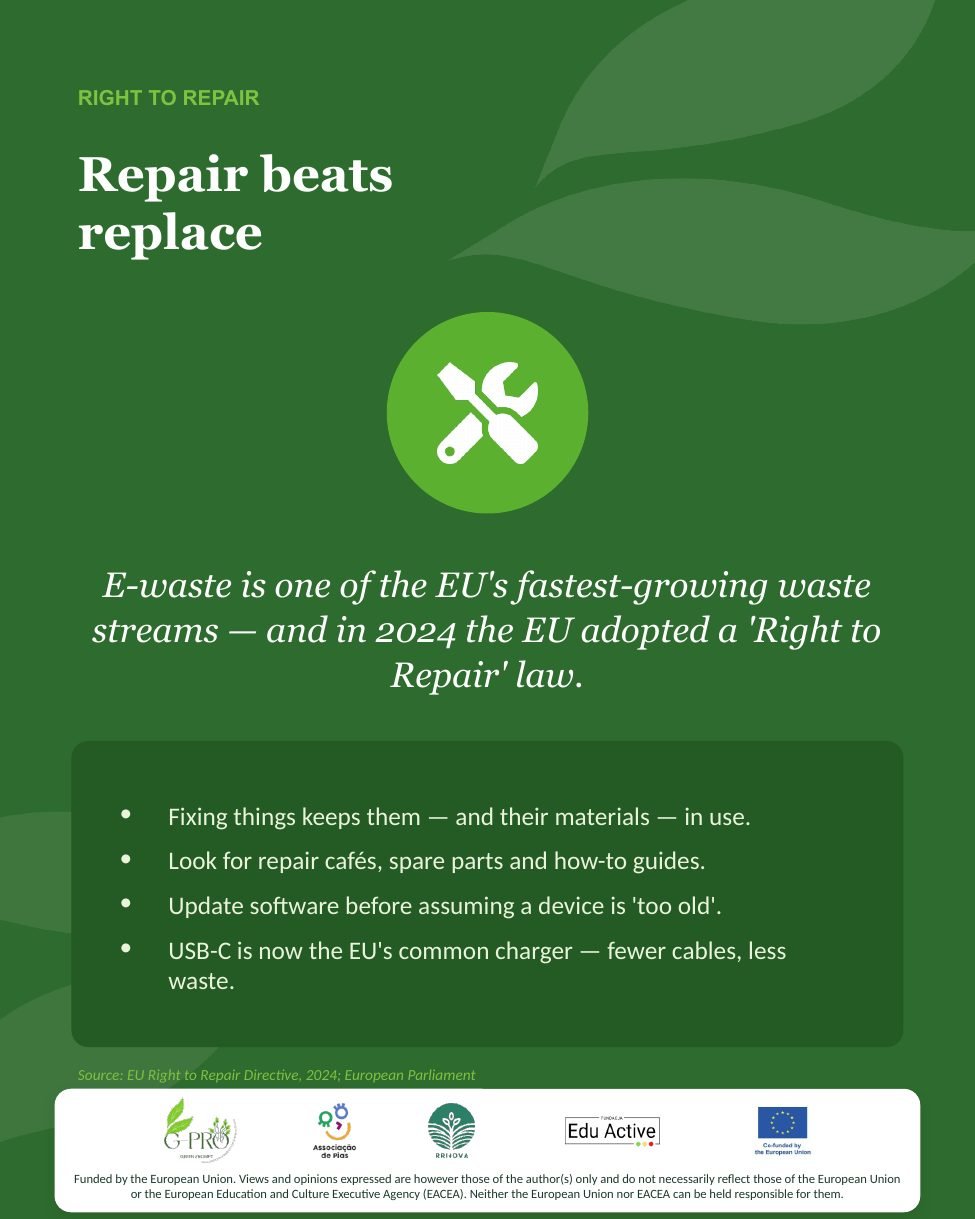
When a kettle, radio or phone stops working, it can be tempting to buy a new one straight away. Yet many older adults remember a time when mending things was simply what people did. Our G-PRO poster on the right to repair shows why that old habit is more valuable than ever.
A growing problem, and an EU law
E-waste, meaning old and broken electrical and electronic items, is one of the EU's fastest-growing waste streams. In 2024 the EU adopted a "Right to Repair" law (Directive (EU) 2024/1799), and its rules apply across the EU since July 2026. Its aim is to make it easier for people to have products repaired rather than replaced. Details differ by product and country, so ask the seller or manufacturer.
Why repair matters
Fixing things keeps them, and the materials inside them, in use. Every item repaired is one less thrown away, and one less that needs to be made new. Repair often saves money too, and many people find real satisfaction in bringing something back to life.
Practical ways to repair more
Look for help nearby
Look for repair cafés, spare parts and how-to guides. Repair cafés are community events where volunteers help you fix items for free or for a small donation. They are also friendly, sociable places to learn new skills and share your own.
Update before you give up
Before assuming a device is "too old", try updating its software. A phone, tablet or computer that feels slow or buggy may work much better after an update. If you are not sure how, ask a family member, friend or a local digital help session.
One charger for many devices
USB-C is now the EU's common charger. This means fewer cables and less waste. Over time, one charger can work for many of your devices, so you do not need a new one every time you buy something.
Learn more
You can read more about mending, reusing and recycling in the G-PRO Handbook chapter on waste, repair and recycling. The G-PRO board game also celebrates repair, and it is a great way to swap mending tips and stories with others.
Source: EU Right to Repair Directive, 2024; European Parliament
More from G-PRO
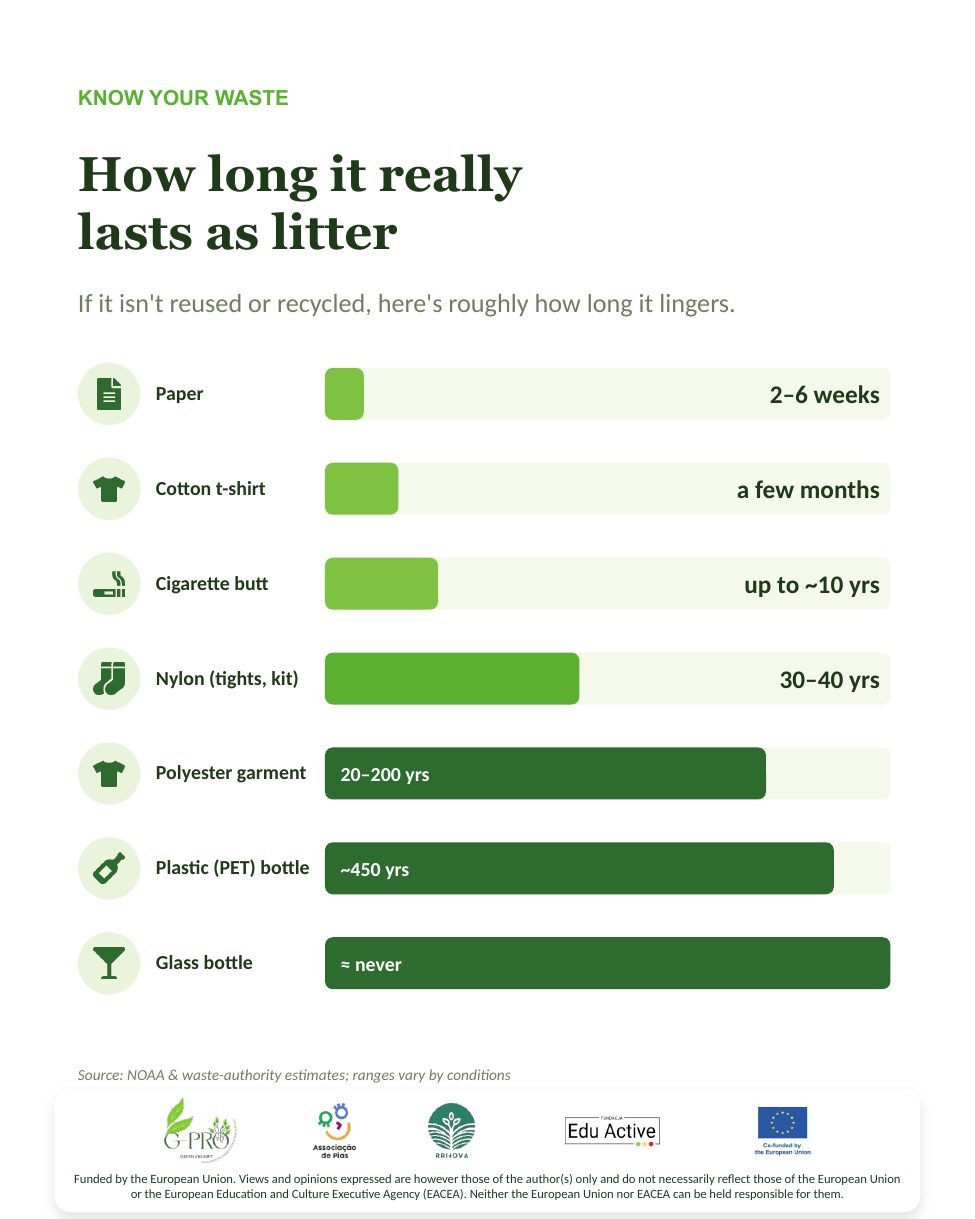
How long does litter really last?
A paper bag disappears in weeks, but a plastic bottle can linger for around 450 years. Knowing how long things last helps us choose what to reuse, recycle and avoid.
Read more →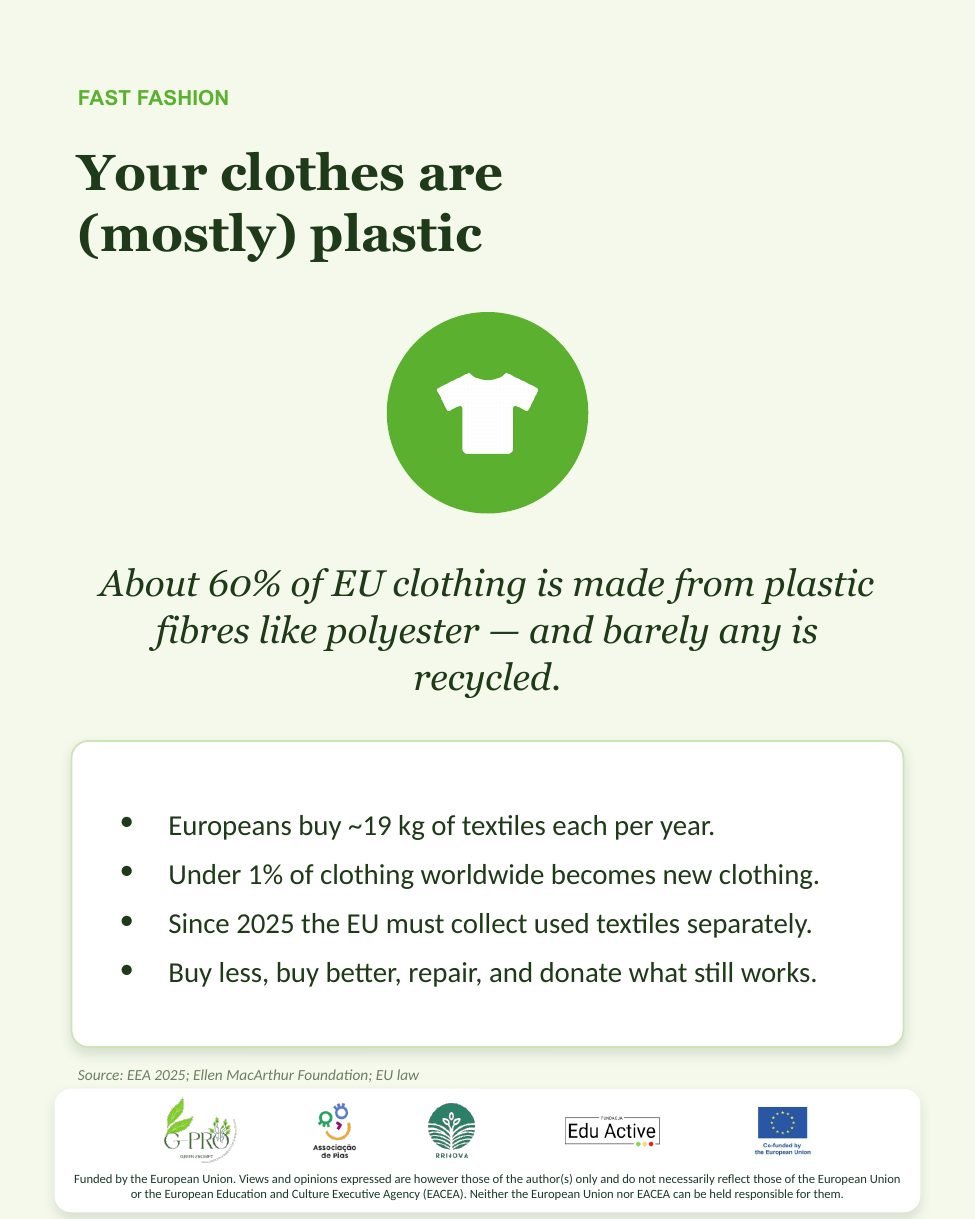
Your clothes are (mostly) plastic
Most clothing sold in the EU is made from plastic fibres, and very little is ever recycled. Here is what that means, and how to buy less, buy better and make clothes last.
Read more →
Laundry and microplastics: five easy habits
Washing synthetic clothes releases tiny plastic fibres into our water. A few simple changes to how you wash and dry can cut this down.
Read more →