
Warm home, lower bills: simple ways to stay cosy in the colder months
Many people in the EU struggle to keep their home warm. Here are five practical habits that help you stay comfortable and healthy while keeping heating costs in check.

When the days grow shorter, heating becomes one of the biggest worries in many households. In 2025, about 1 in 11 people in the EU could not keep their home warm. That is not only a question of comfort or money: a cold home affects health, too.
The good news is that a few simple habits can make a real difference. None of them need expensive equipment, and several cost nothing at all.
Find your comfortable temperature
A common comfort guide is to keep living areas at around 18 to 21°C. You do not need to heat every room to the same level all day. Think about where you sit, read, eat and watch television, and focus on keeping those spaces pleasant.
If you feel the cold easily, or have a health condition, stay on the warmer side of that range. Feeling warm enough matters more than saving every last cent.
Heat the room, not the house
Close internal doors and warm the rooms you actually use. A spare bedroom or an unused dining room does not need the same heat as your sitting room. Keeping doors shut helps the warmth stay where you are.
Stop the draughts
Cold air sneaks in through small gaps. Check around doors, windows and floorboards. A draught excluder, a strip of seal or even a rolled-up towel along the bottom of a door can help. Closing curtains in the evening is another easy way to hold on to heat.
Layer up, move and ask about support
Warm layers, a blanket on your lap and warm socks help you feel warmer without touching the thermostat. Gentle movement, such as a short walk around the house or a few stretches every hour, also gets your circulation going.
Finally, many countries offer help with heating costs. It is worth checking what support exists where you live, perhaps with a local advice centre, your energy supplier, or a family member who can help you look.
Learn more
The G-PRO Handbook chapter on energy at home has more ideas for staying warm, reading energy bills and using AI to explore your options. You can also practise these habits, and make your own commitment, while playing the G-PRO board game with friends or in a group.
Source: Eurostat 2025 (energy poverty); WHO guidance
More from G-PRO
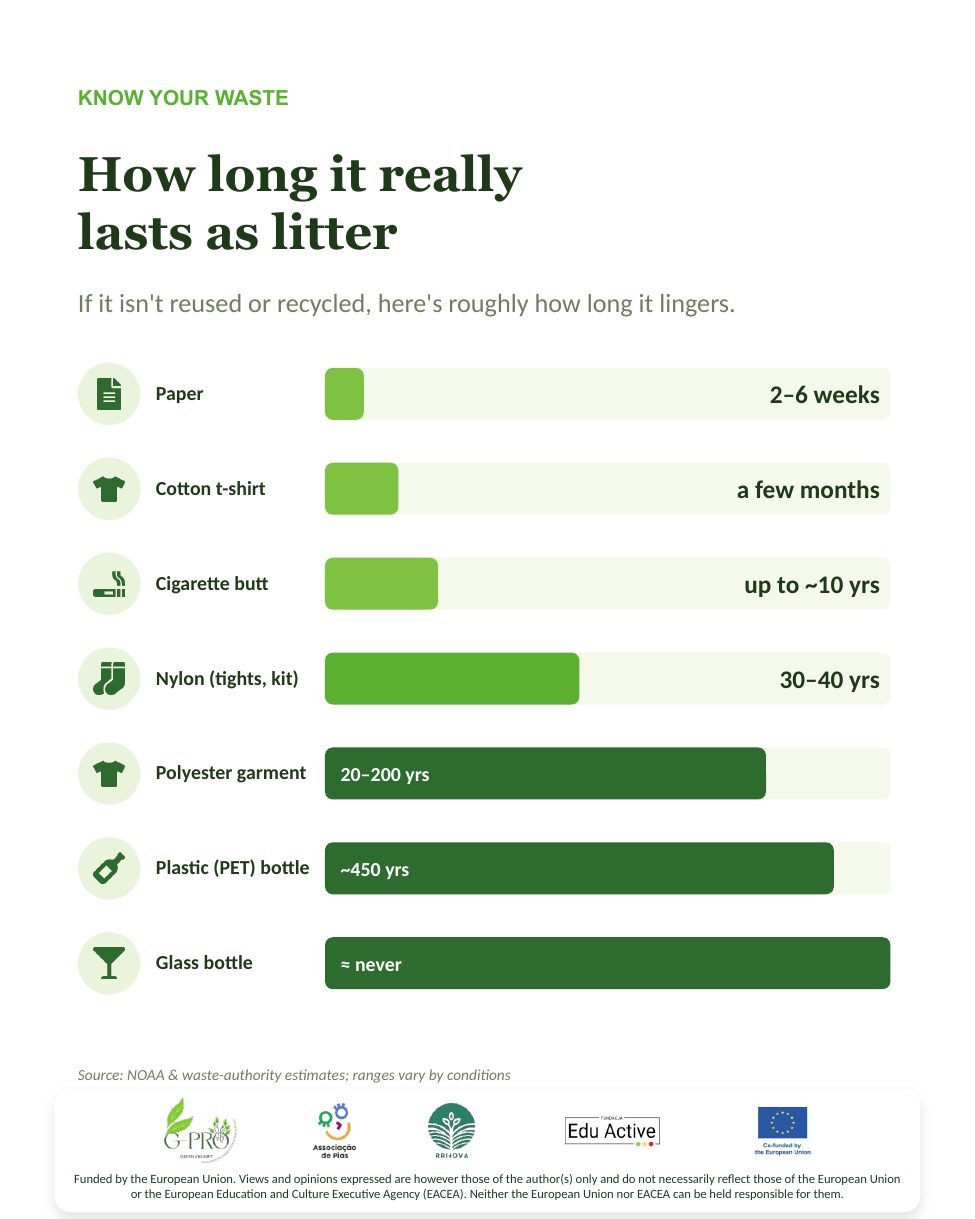
How long does litter really last?
A paper bag disappears in weeks, but a plastic bottle can linger for around 450 years. Knowing how long things last helps us choose what to reuse, recycle and avoid.
Read more →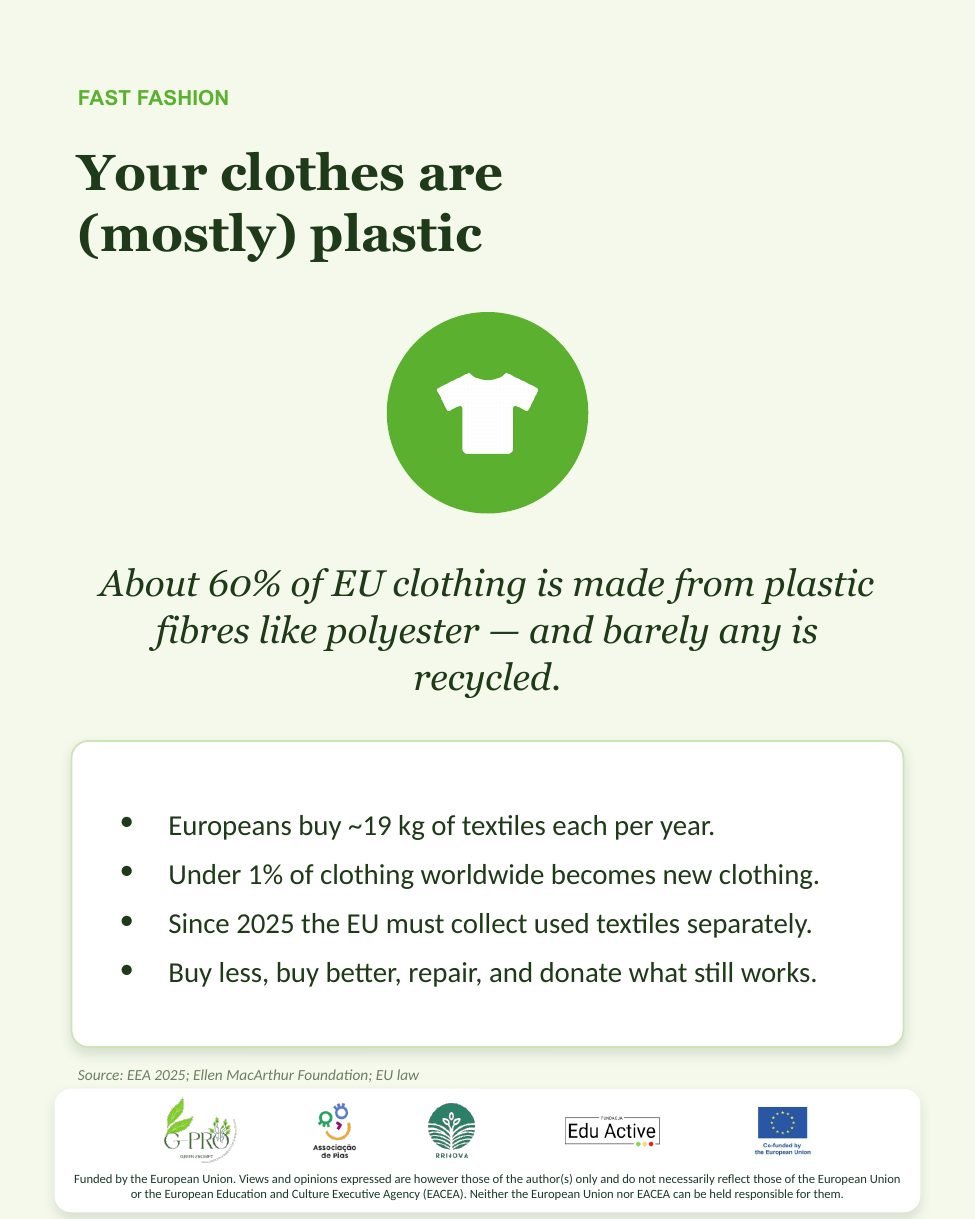
Your clothes are (mostly) plastic
Most clothing sold in the EU is made from plastic fibres, and very little is ever recycled. Here is what that means, and how to buy less, buy better and make clothes last.
Read more →
Laundry and microplastics: five easy habits
Washing synthetic clothes releases tiny plastic fibres into our water. A few simple changes to how you wash and dry can cut this down.
Read more →