
What's on your plate matters most
What we eat often matters more for the climate than how far it has travelled. Here are five simple ideas for climate-smart eating, with balance rather than perfection.

Many of us have heard that we should buy local food to help the planet. That is a good habit, but our G-PRO poster on climate-smart eating points to something even more important: what we eat often matters more for the climate than how far it travelled.
Five ideas for climate-smart eating
Red meat hits hardest
Beef and lamb have by far the biggest footprint of the foods on our plates. Eating them less often is one of the most effective changes we can make in the kitchen.
Plants are gentle
Beans, lentils and vegetables have a fraction of the impact. They are also affordable, filling and can be cooked in many delicious ways. Think of a hearty lentil soup, a bean stew or a vegetable bake.
Seasonal and local helps
Choosing seasonal and local food still has value. It matters less than what we eat, but it can trim waste and food miles, and seasonal produce often tastes better and costs less.
Waste nothing
When food goes in the bin, all the water and energy used to produce it is wasted too. Using leftovers, freezing extra portions and buying only what we need all count.
Balance, not perfection
You do not have to change everything at once or give up the foods you love. Even a few meat-free meals a week adds up over time.
Drawing on what we already know
Many older adults grew up in kitchens where meat was a treat rather than an everyday food, and where nothing was wasted. Those family recipes for soups, stews and vegetable dishes are a wonderful starting point. Sharing them with children, grandchildren or friends is a lovely way to pass on a greener habit.
Learn more
For more ideas on food and shopping choices, see the G-PRO Handbook chapter on shopping, food and spotting greenwashing. The G-PRO board game also brings food questions to the table, and they are sure to spark plenty of conversation about favourite recipes.
Source: Our World in Data; Poore & Nemecek, 2018
More from G-PRO
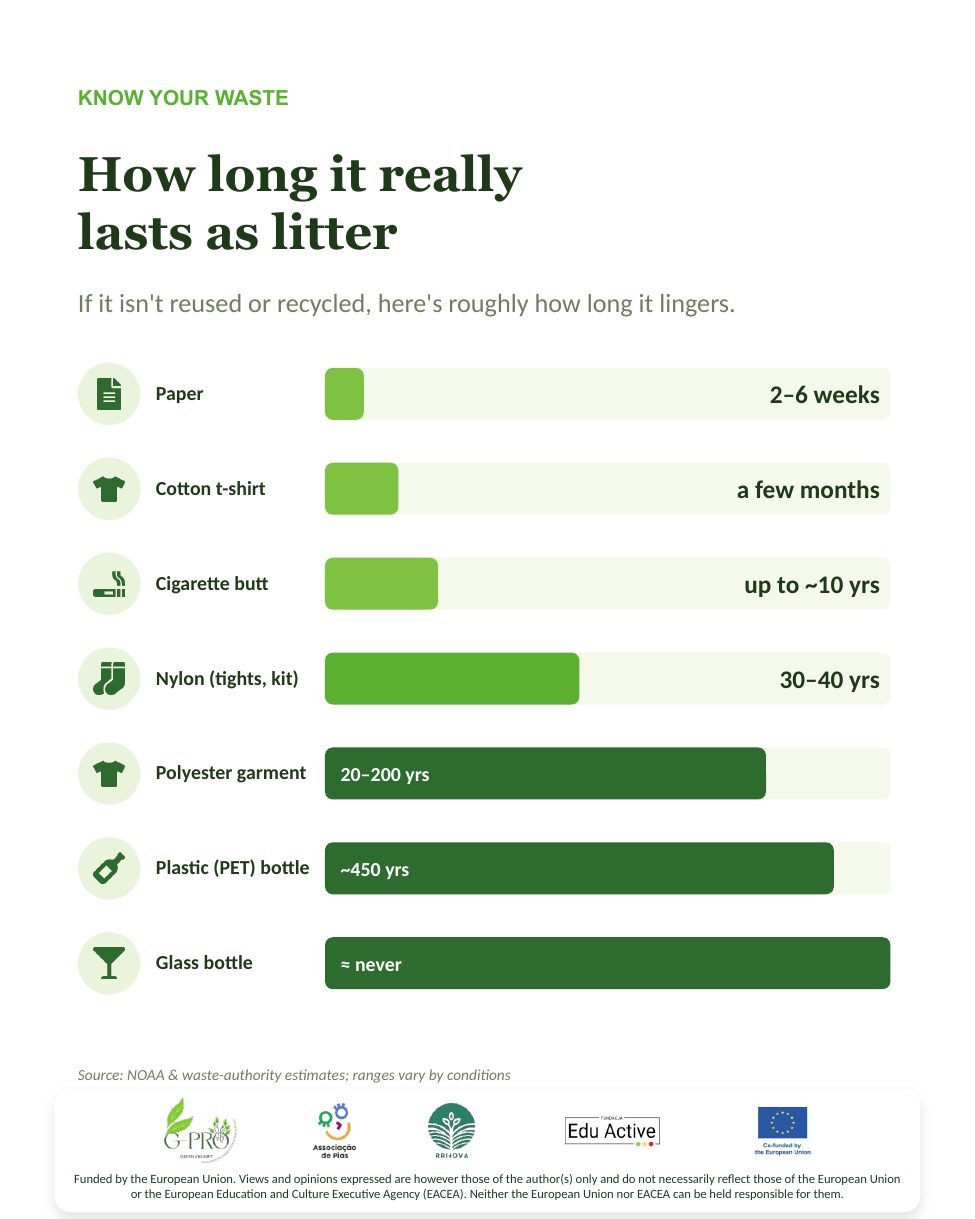
How long does litter really last?
A paper bag disappears in weeks, but a plastic bottle can linger for around 450 years. Knowing how long things last helps us choose what to reuse, recycle and avoid.
Read more →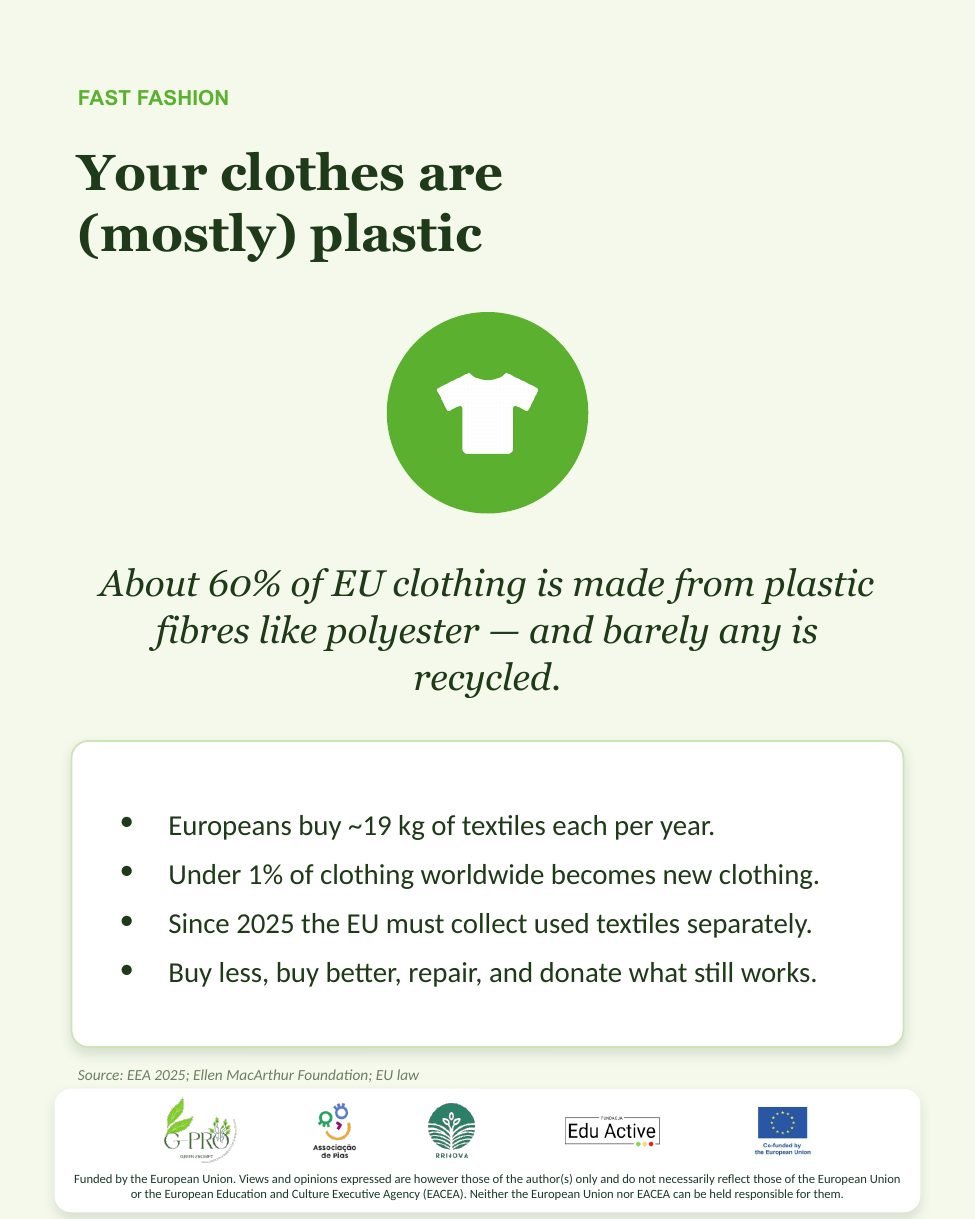
Your clothes are (mostly) plastic
Most clothing sold in the EU is made from plastic fibres, and very little is ever recycled. Here is what that means, and how to buy less, buy better and make clothes last.
Read more →
Laundry and microplastics: five easy habits
Washing synthetic clothes releases tiny plastic fibres into our water. A few simple changes to how you wash and dry can cut this down.
Read more →